

Voice as the second controller
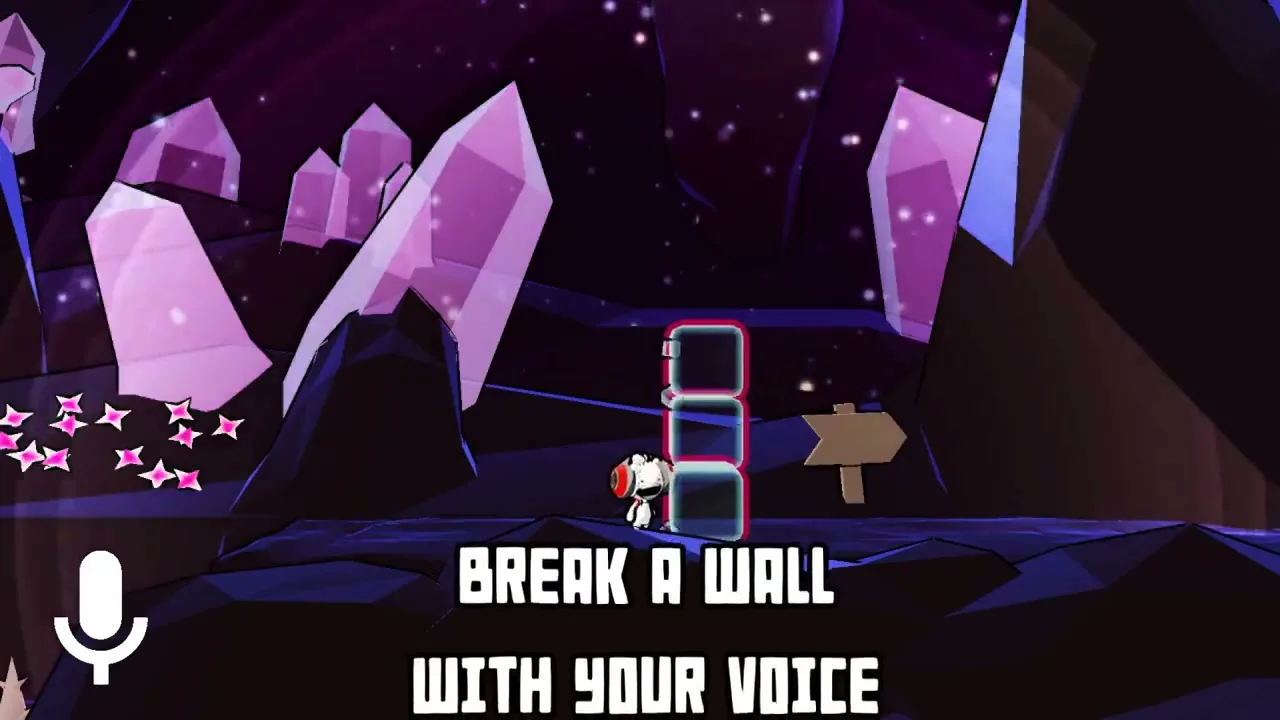
Resonance: The Lost Score is a single-player adventure in which the player guides Wez toward the missing score. Running and jumping stay on a keyboard or gamepad; the microphone adds the defining ability: matching pitches to break glass, move objects and open the path.
At a glance
- Single-player movement with keyboard or gamepad.
- A microphone is required for sound-powered obstacles.
- The mechanic responds to vocal pitch, not volume or spoken commands.
- A ten-level campaign followed by a final encounter.
Designing for real microphones
The challenge was not simply detecting sound. Voices, microphones and background noise all produce different readings, so each interaction needed to show whether the current pitch was below, inside or above the expected range. Version 1.1 strengthened the system with more reliable pitch detection and microphone calibration.
Visual direction: from plan to certainty
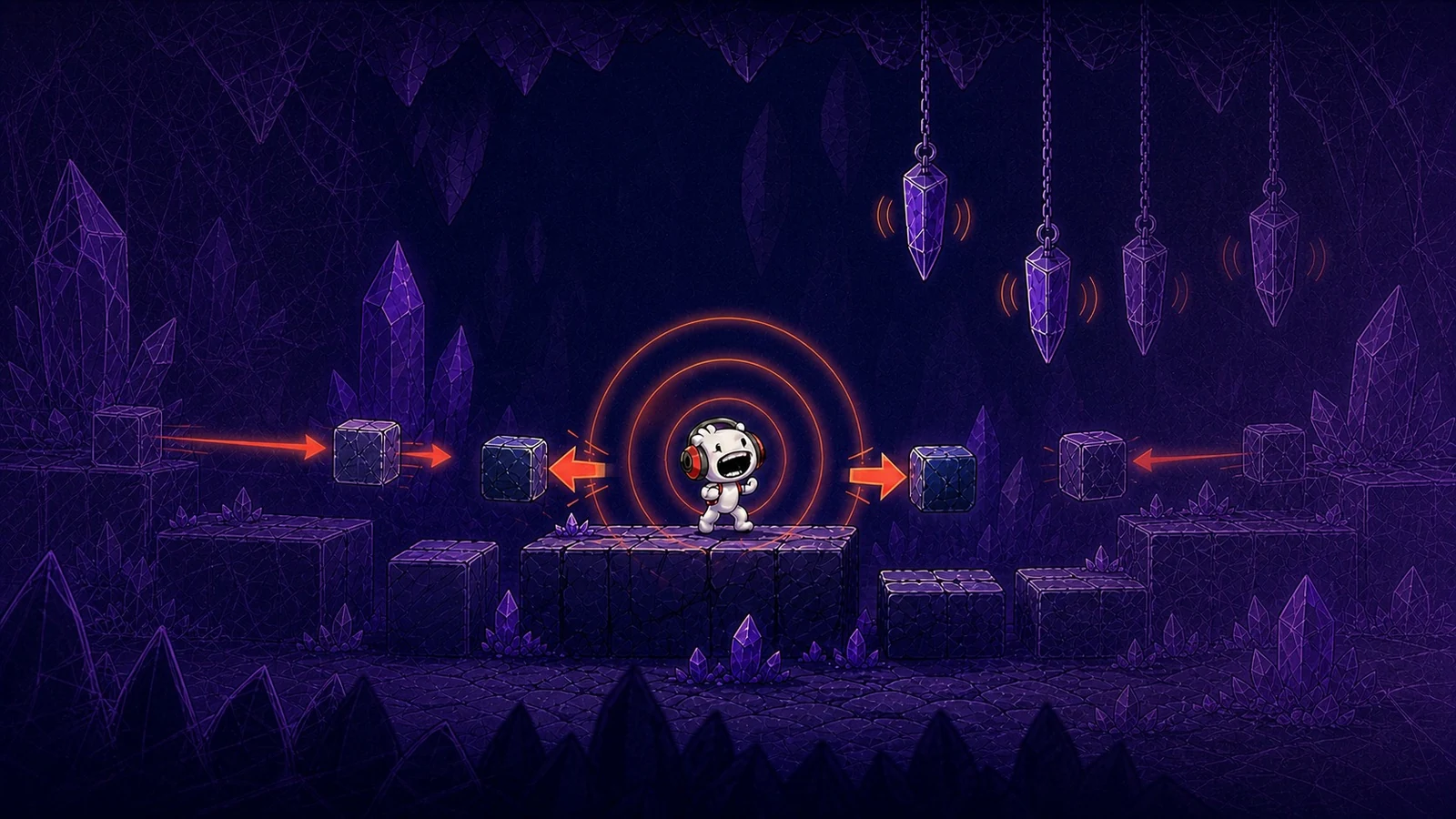
The updated visual system mirrors the development process. The outer edges remain sketched because they represent what is still being planned; the artwork consolidates as it approaches Wez and the active interaction. These are not three disconnected panels, but one continuous move from uncertainty to a resolved decision.
- Side-scroller first: the horizontal route and next landing must read before the 2.5D depth.
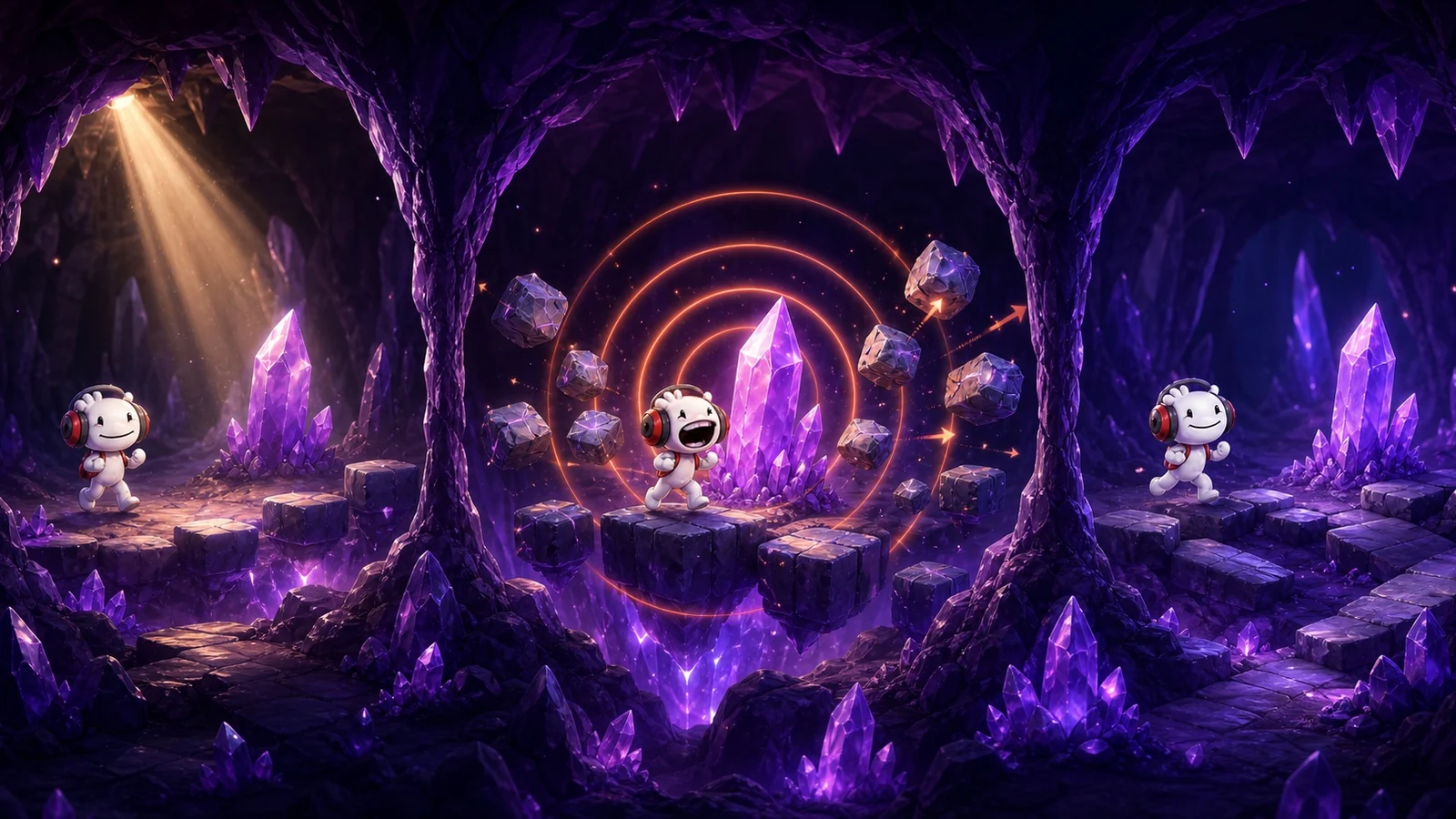
- Three Wez states: explore, resonate and recover preserve the same white body, black/red headphones, coral backpack and high-contrast face.
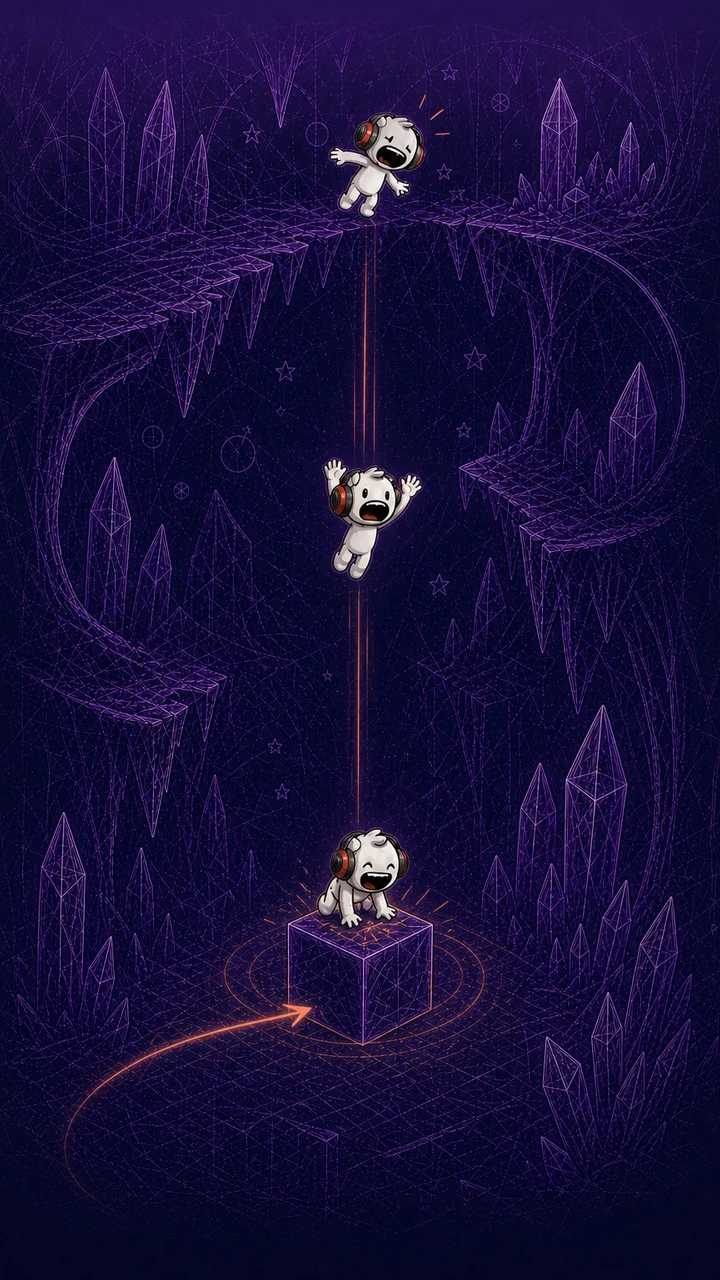
- One mechanic per transition: one fall uses one rescue block; distant blocks announce their approach while nearby blocks make repulsion unmistakable.
- Never photoreal: crystals, stone and light use an illustrative flat-shaded finish, keeping sketch visible wherever the solution is still forming.
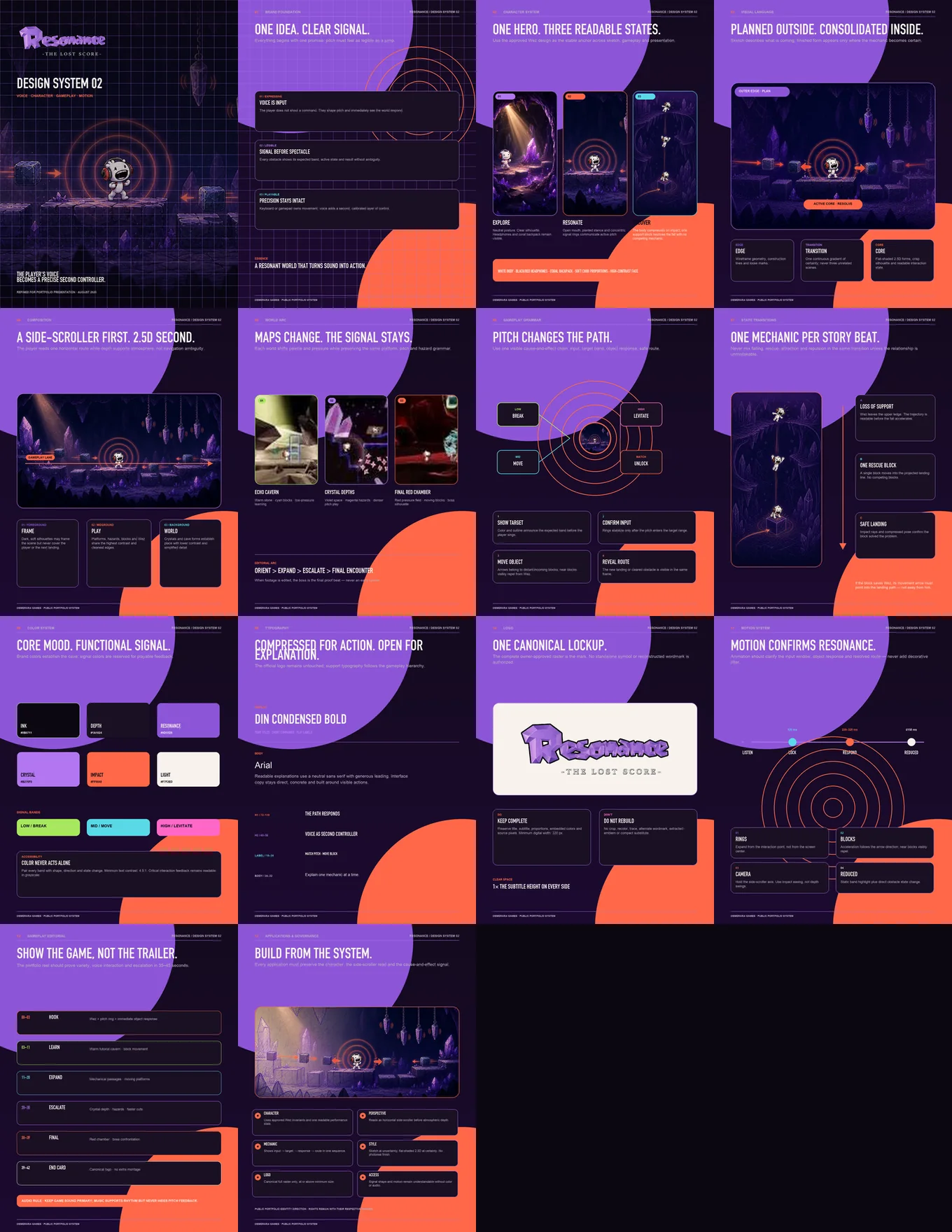
The Design System 02 documents the character, perspective, color, type, feedback, motion and gameplay-editing rules.
Gameplay as a proof arc
The complete gameplay reveals a useful presentation arc: warm caverns introduce blocks and pitch bands; mechanical passages increase precision; the crystal depths combine hazards with denser responses; and the red chamber closes the sequence with the final encounter. In the reel, that boss belongs only in the last beat, after the range of maps and voice control are already clear.
From Global Game Jam to release
Resonance began at Global Game Jam 2017, at the PONG — Potiguar Indie Games & InPACTA site. The original entry preserves the first build, source files, team and the core idea that guided the project: conventional movement paired with vocal pitch. The entry received 154 hearts from the jam community.
After the event, the prototype evolved across three fronts:
- Scope: from a jam experience into a ten-level campaign with a final encounter.
- Product: from the jam builds into a commercial itch.io release for Windows, macOS and Linux, with Brazilian Portuguese localization.
- Reliability: fixes to the final level, performance improvements and, in version 1.1, a new pitch detector with background-noise calibration.
The organization later included the game among its Global Game Jam 2017 success stories, highlighting how the original idea continued into a released product.
Release and legacy
The project shipped in 2017 for Windows, macOS and Linux, received Brazilian Portuguese localization and inspired community gameplay videos. The public builds preserve that period release; this case documents the delivered product and engineering work without claiming compatibility with current operating-system versions.