


About this portfolio

SEO

100 words

  • Unity
  • Multiplayer
  • LiveOps
  • C#

Leonardo Lycan is a Lead Game Developer specializing in Unity game development, multiplayer architecture, gameplay systems, LiveOps, and technical production. This portfolio brings together published projects, playable prototypes, product studies, and articles on game engineering, applied AI, Web3, onboarding, and digital experiences. The work combines team leadership, C# programming, service integration, performance optimization, and clear communication across design, art, and business. For projects, consulting, or collaboration, Leonardo takes a practical approach: understand the problem, build a robust solution, and turn complex requirements into memorable experiences for players and digital products with measurable, lasting impact for teams, audiences, and product goals.

Production case

Water Battle Arena

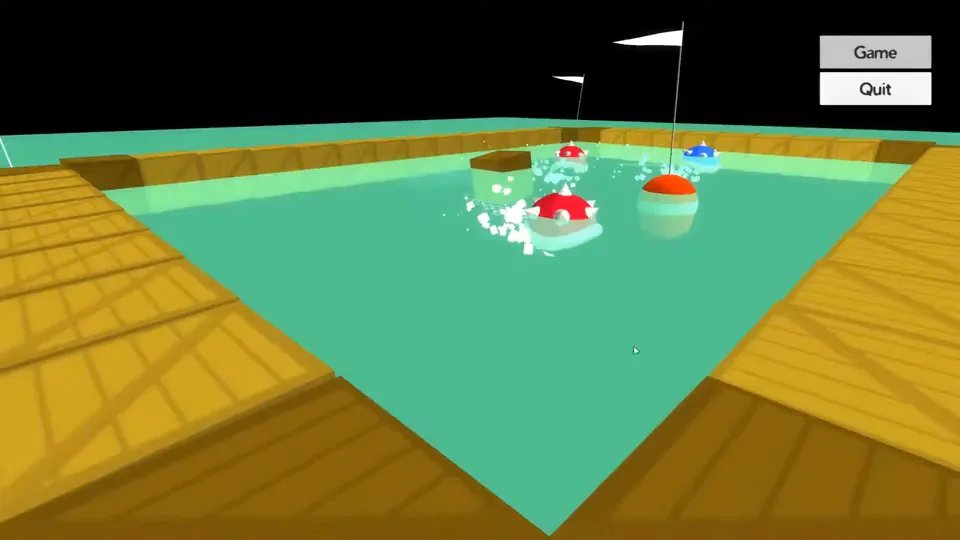
A local arena for up to four players whose evolution from low-poly test to final demo is preserved across three public builds. Each milestone captures a distinct stage of game development, from raw collision tests and movement tuning to polished arena compositions with dynamic water physics, particle effects and AI-controlled opponents.

Explore the case

Project Evolution

Currently, the game is in the MVP phase supporting up to 4 simultaneous players.

ClientAcademic project
Period2016
RoleGame design and development
PlatformsPC

Build progression

From first playable to presentation-ready.

Three archived builds make the evolution visible: the core water movement came first, then the match flow, art direction and final readability.

BUILD 01 / 03
  1. Build 01 / 0330 Sep — 01 Oct 2016

    First playable

    The mechanic before the presentation

    A low-poly arena validates buoy movement, collisions and local competition with only the minimum interface needed to play.

  2. Build 02 / 0301 — 06 Oct 2016

    Interaction pass

    A match flow players can understand

    Player count, start flow and arena feedback appear while the original movement system remains recognizable.

  3. Build 03 / 0306 Oct — 30 Nov 2016

    Presentation demo

    Art, feedback and four-player readability

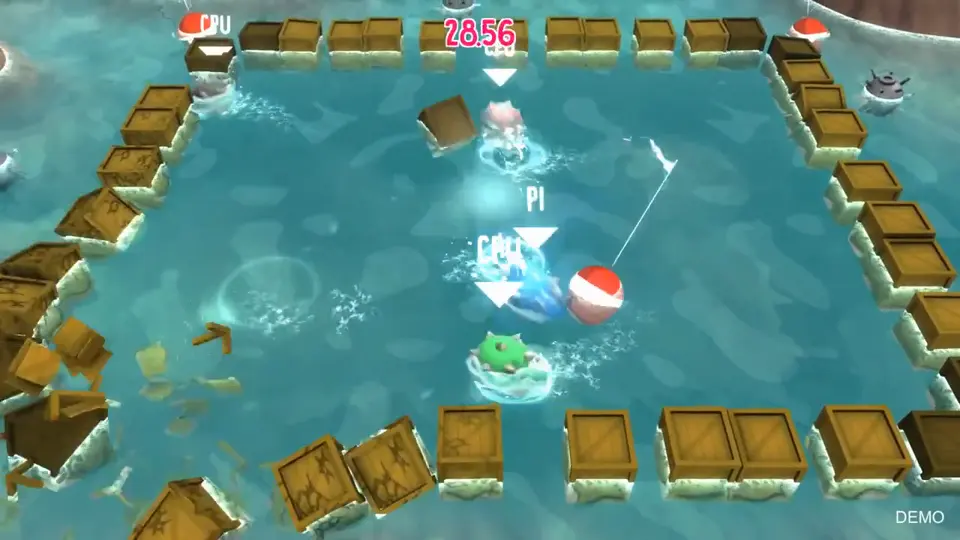
    The final recorded pass adds a richer water treatment, clearer player markers, CPU behavior and a more authored arena composition.

01

Challenge

Validate a local competition on water without losing readability across four characters, obstacles, match time and CPU behavior.

02

Solution

Evolve the game through short milestones: movement and collisions first, match flow second, then art, feedback and arena composition.

03

Outcome

Three versions recorded between September and November 2016 provide a clear comparison between first playable, interaction pass and presentation demo.

Visual research · exploratory concept

From test to readable arena

The three preserved builds already show movement, CPU and collisions. This research organizes a possible presentation evolution for those same foundations while keeping concept art separate from the recorded demo.

Preserved prototypeConcept exploration
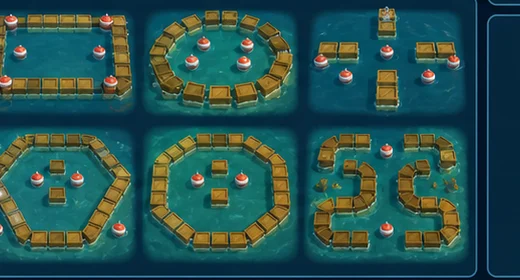
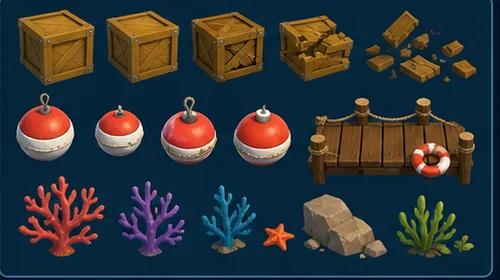
  1. Studies of water arenas, floating crates, islands, docks and four-player spacing.

    01 · Arena

    Design the confrontation

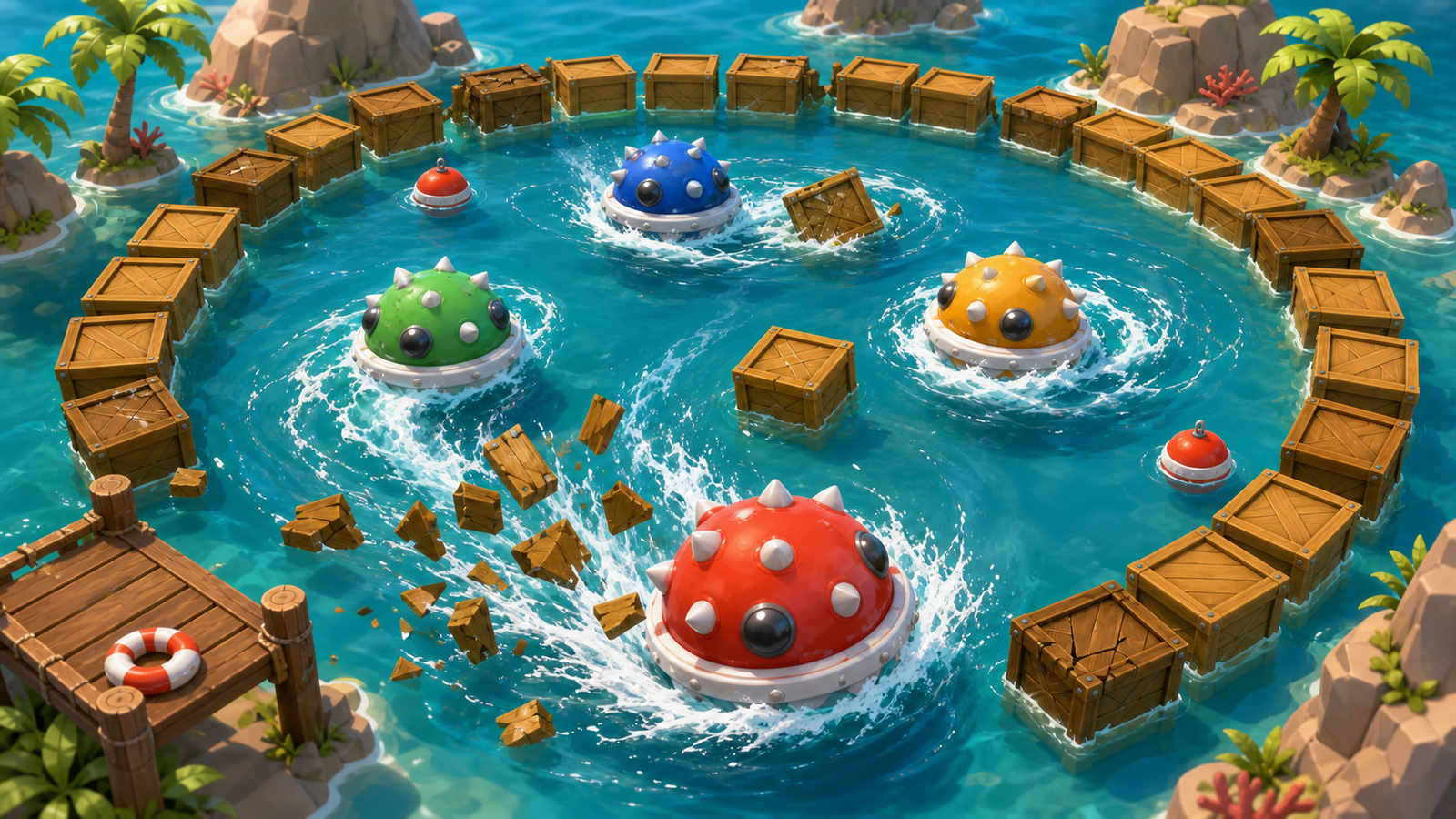
    Boundary, obstacle and density variations keep four trajectories understandable. Crates form breakable limits while islands and docks orient the space without competing with the action.
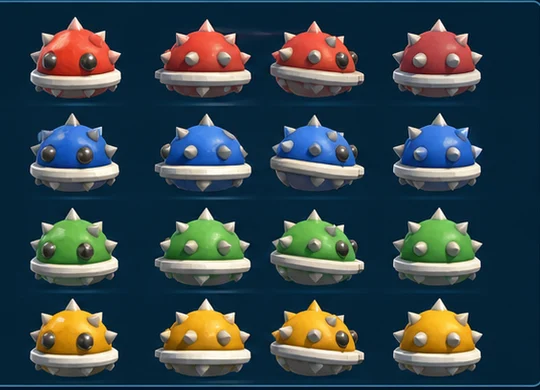
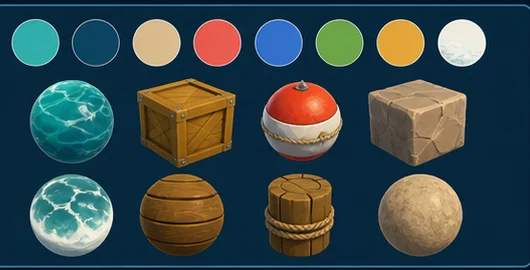
  2. Turnarounds, colors, scale and collision poses for the four water competitors.

    02 · Players

    Differentiate competitors

    Rounded volumes and spikes preserve the prototype silhouette. Red, blue, green and yellow identify each competitor while tilt and squash communicate impact and recovery.
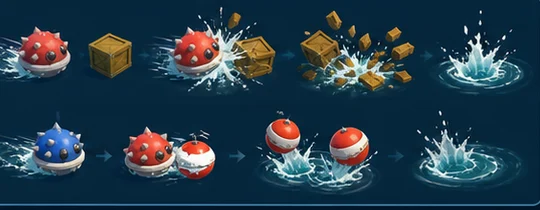
  3. Studies of breaking crates, buoys, props, splashes, wakes and collision flows.

    03 · Impact

    Make collisions answer

    Wakes, foam, arcs and break stages connect input and consequence. Feedback must remain readable when four competitors and several crates share the frame.
  4. 04 · Synthesis

    Unite party and clarity

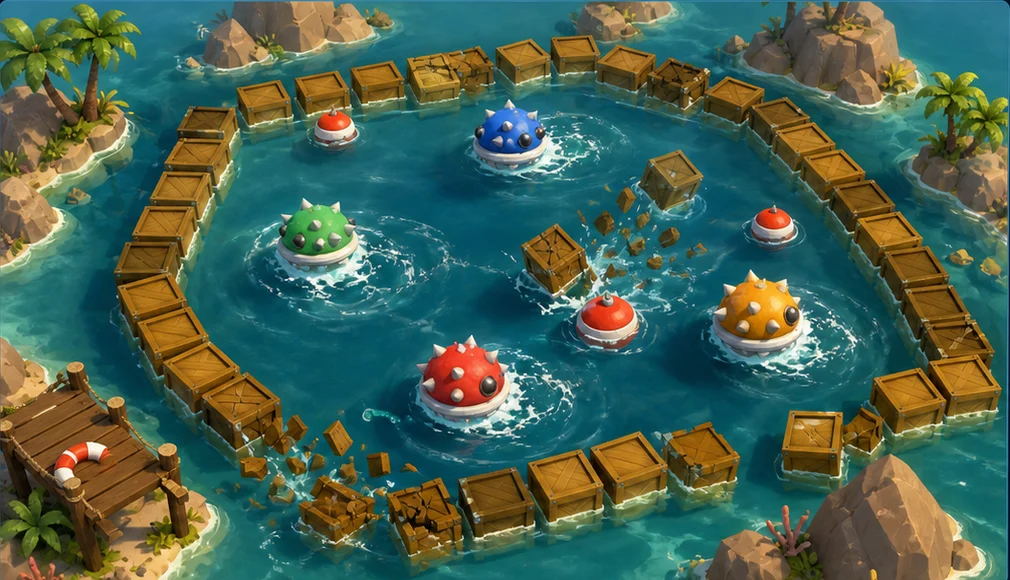
    The key art unites arena, four colors and obstacles in one read. The proposal expands the low-poly demo as a future cartoon direction without replacing the historical build record.
Concept key art of four rounded spiky competitors colliding in a tropical water arena enclosed by floating crates.
Concept vision

Proposed direction for a future final pass — not captured final gameplay.

Mechanics first, finish later

Water Battle Arena began as an academic project around one question: could four floats compete in a water arena without speed, collisions and obstacles making the match unreadable?

Three visible milestones

The first build, recorded between September 30 and October 1, 2016, validates movement and collisions in a low-poly arena. The second, from October 1–6, introduces player selection and a clearer match flow. The demo recorded through November 30 consolidates water, CPU, markers, feedback and visual composition.

Why the comparison matters

The three builds expose progress a single final screenshot would hide: visual identity arrives after interaction works. The comparison above uses preserved clips from every phase and keeps the original public videos linked as evidence.
Inside Water Battle Arena

01

Risk

What could fail?

Validate a local competition on water without losing readability across four characters, obstacles, match time and CPU behavior.
02

Decision

What changed the direction?

Evolve the game through short milestones: movement and collisions first, match flow second, then art, feedback and arena composition.
03

System

What can the team reuse?

A foundation built with Unity, C#, 3D to support iteration and delivery.
04

Outcome

What became better?

Three versions recorded between September and November 2016 provide a clear comparison between first playable, interaction pass and presentation demo.
Technologies

Unity · C# · 3D

Links

First version ↗Second version ↗Final demo ↗

Closure

What this project leaves.

Three versions recorded between September and November 2016 provide a clear comparison between first playable, interaction pass and presentation demo.