Campaign · connected world
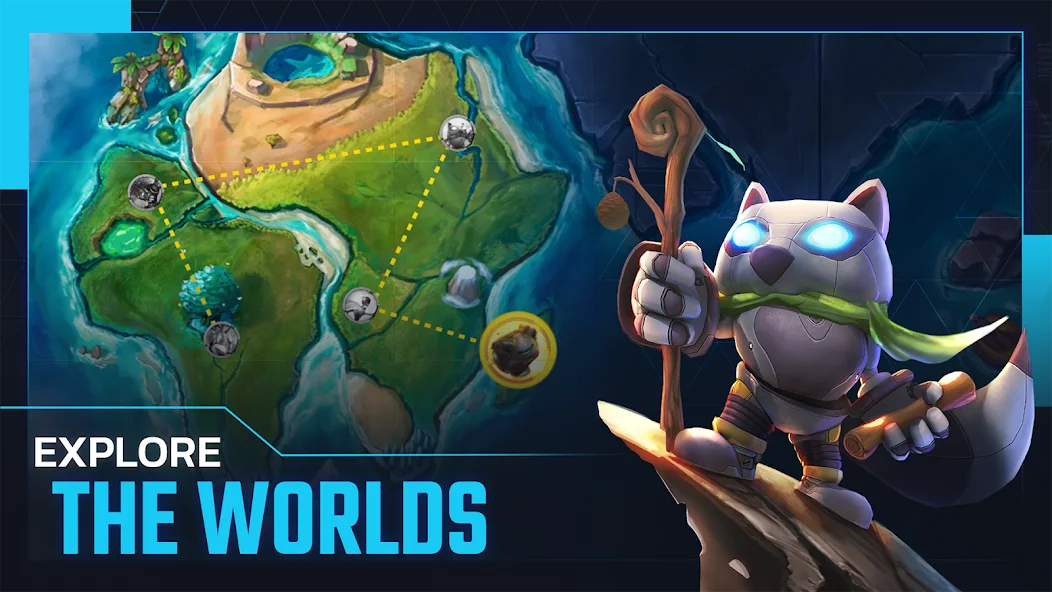
The fox opens the map.
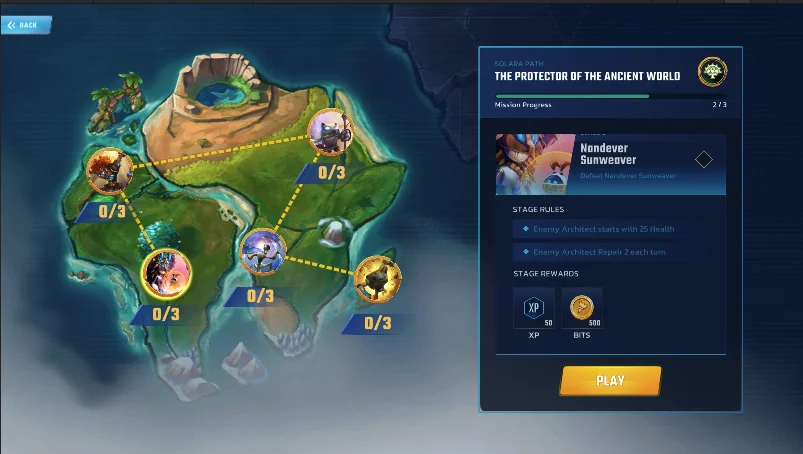
The character leads the opening read of the case: a world larger than a single match, with regions, missions and rewards framing the next battle.
- Campaign
- World map
- Missions
Public product · TCG + auto-battler
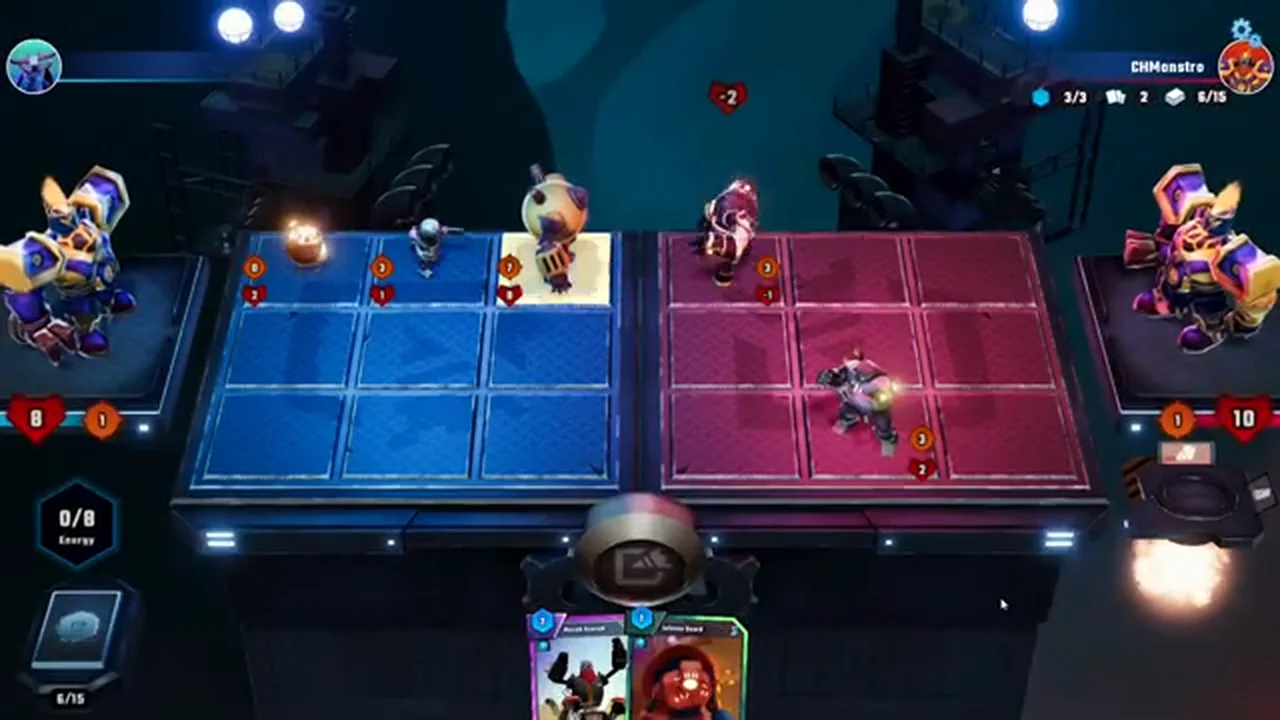
A grid-based TCG + tactical auto-battler with three factions, progression, PvP with bot fallback and digital ownership inside one product. Build decks from over 100 unique characters in a LiveOps ecosystem with recurring quests, contextual rewards, remote content, feature toggles and an instrumented FTUE.
Flagship case
From bot fallback to the next season — and from a quest to an NFT asset.
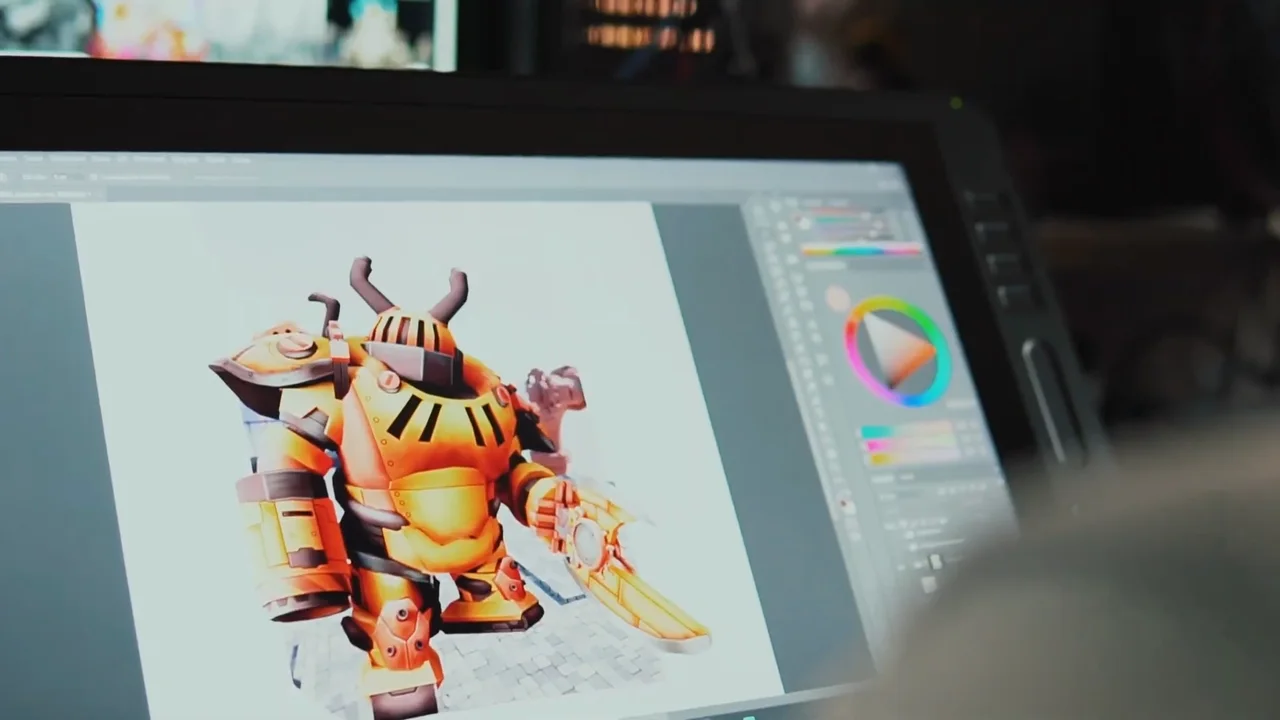
01/ 10
Official product context
Visual identity is born alongside the rule: pressure, range or staying power change the value of every grid position.
Public progression
The current loop connects combat, resources, Blueprints and arsenal growth — a short cycle that opens new tactical decisions.
Where to play
My contribution
The context above describes the public game. This block scopes my documented work in Unity and the systems supporting its operation.
Quests, DATA Pass, inventory, tutorials, maps, rewards and Web3 flows organized around patterns that can evolve together.
Seasonal cycles connecting hub, battle, pass, objectives and rewards without dismantling the core loop.
Connected-product integrations treated as readable states for players, interface and operations.
Build and release pipelines supporting the same product across mobile and PC.
Interactive sketchbook · Jenots
Flip through the Jenots process: exploration, definition, 3D production and composition — from the first sketch to the character inside the game.
Swipe sideways or use the arrows
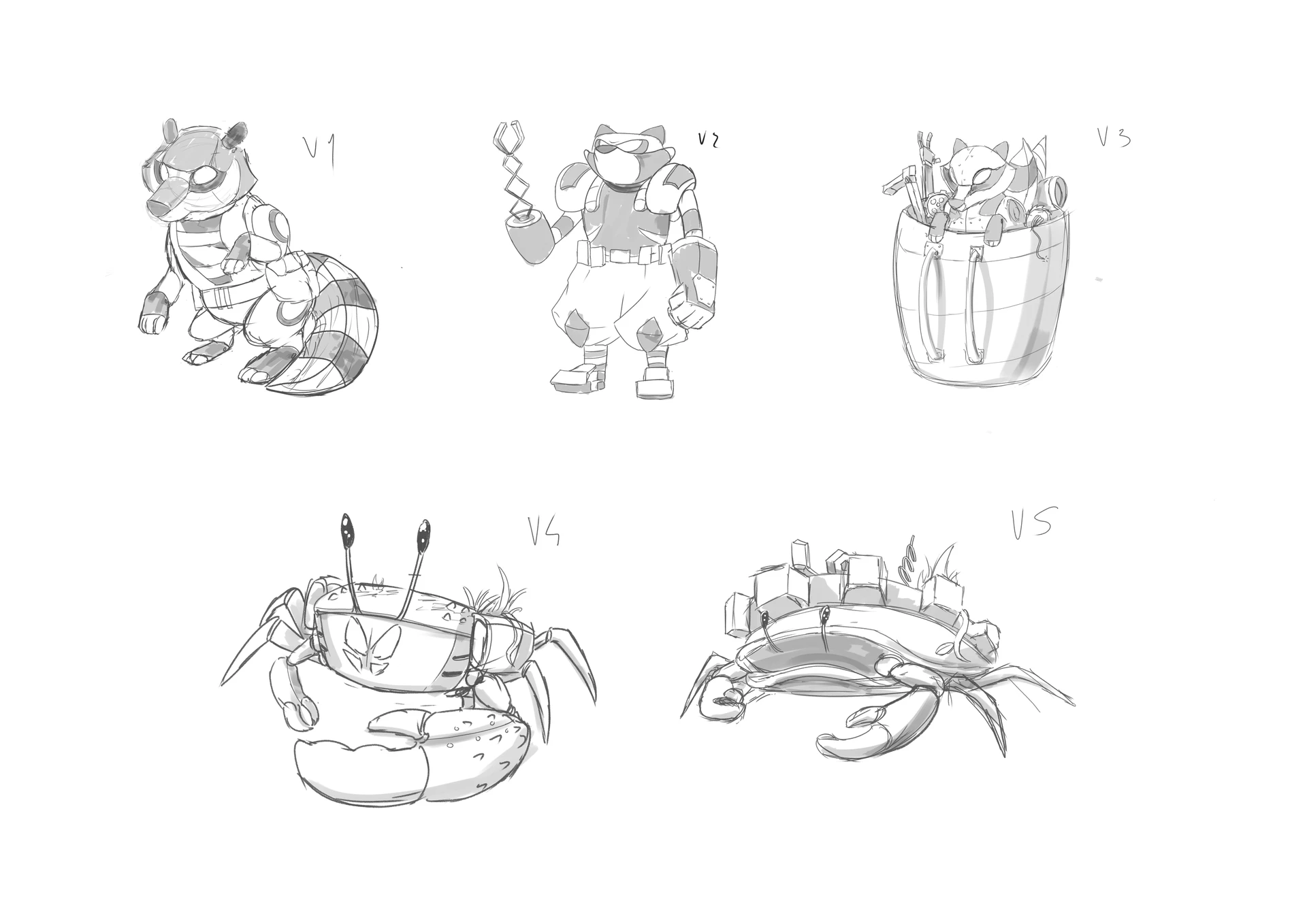
Exploration
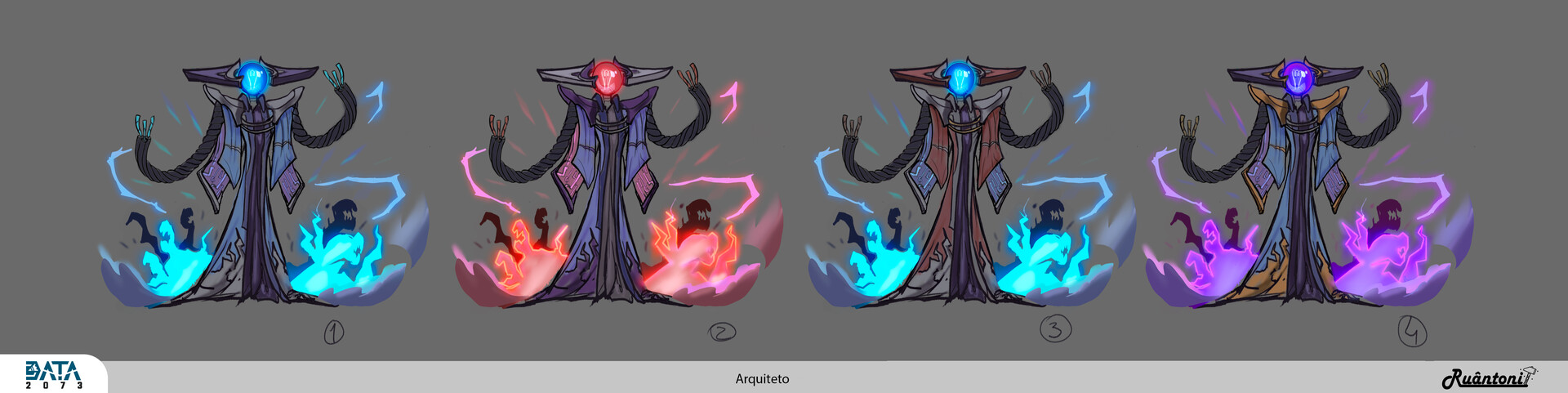
Five proposals test silhouette, function and personality before any one solution is treated as final.
Art and concept byRuântoni Farias ↗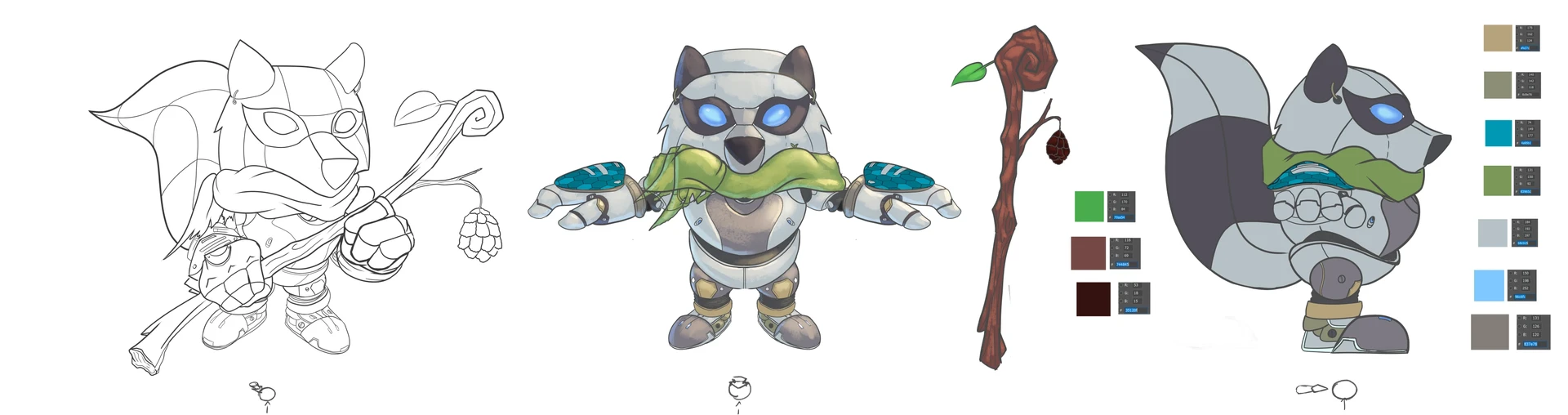
Definition
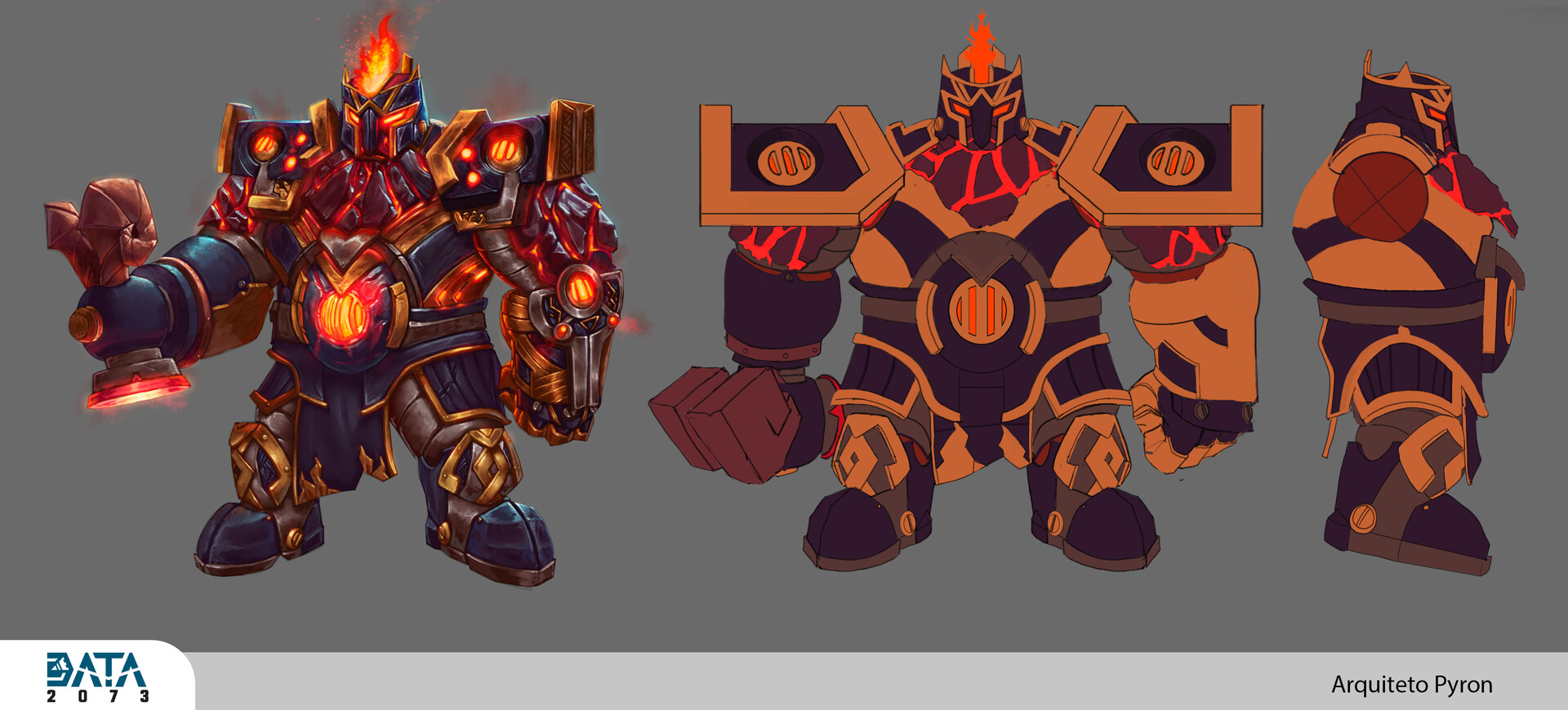
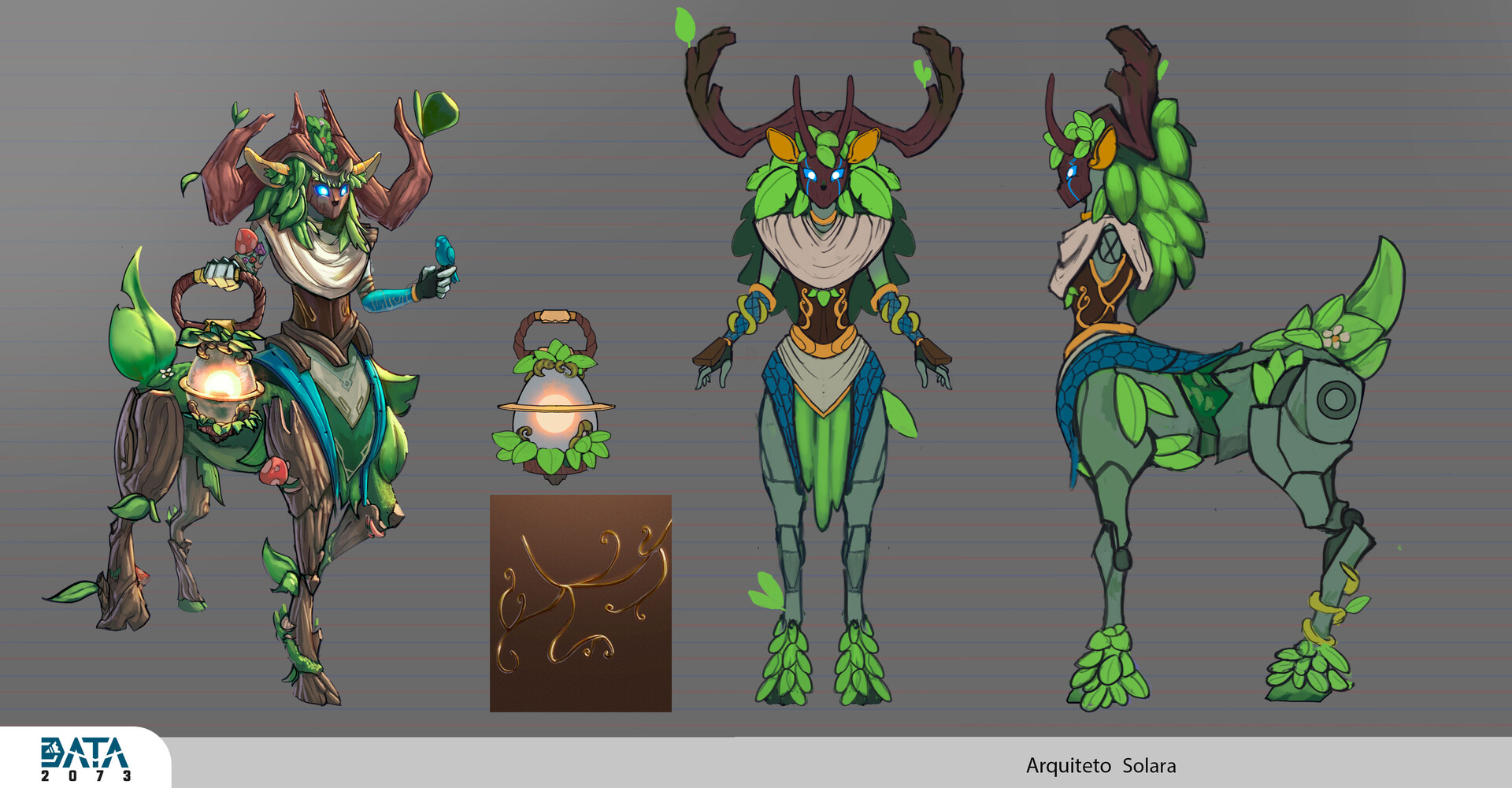
Turnaround, palette and props turn the chosen direction into a clear production reference.
Art and concept byRuântoni Farias ↗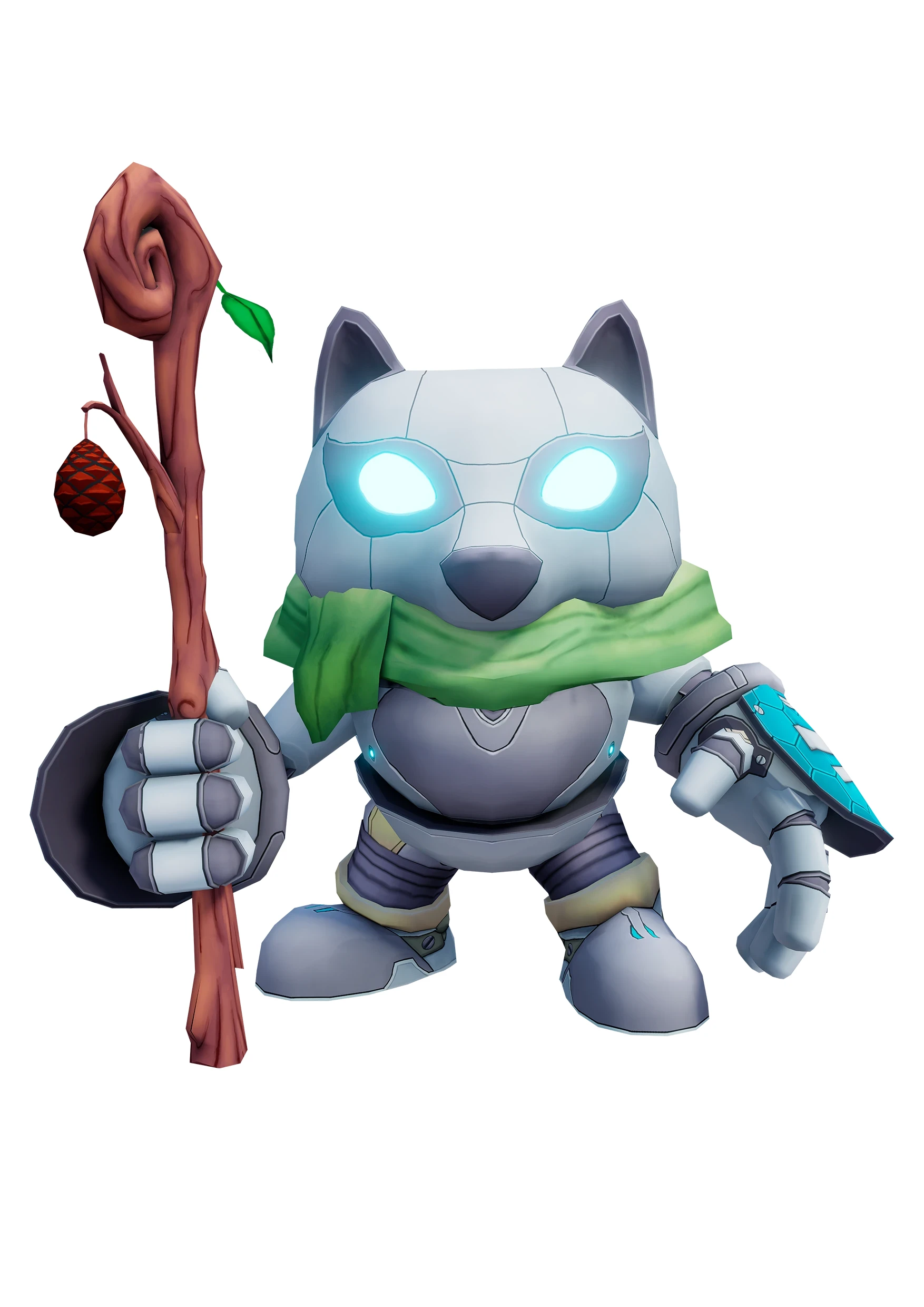
3D production
Volume, materials and three-dimensional readability move the concept from paper into a scene-ready asset.
Art and concept byRuântoni Farias ↗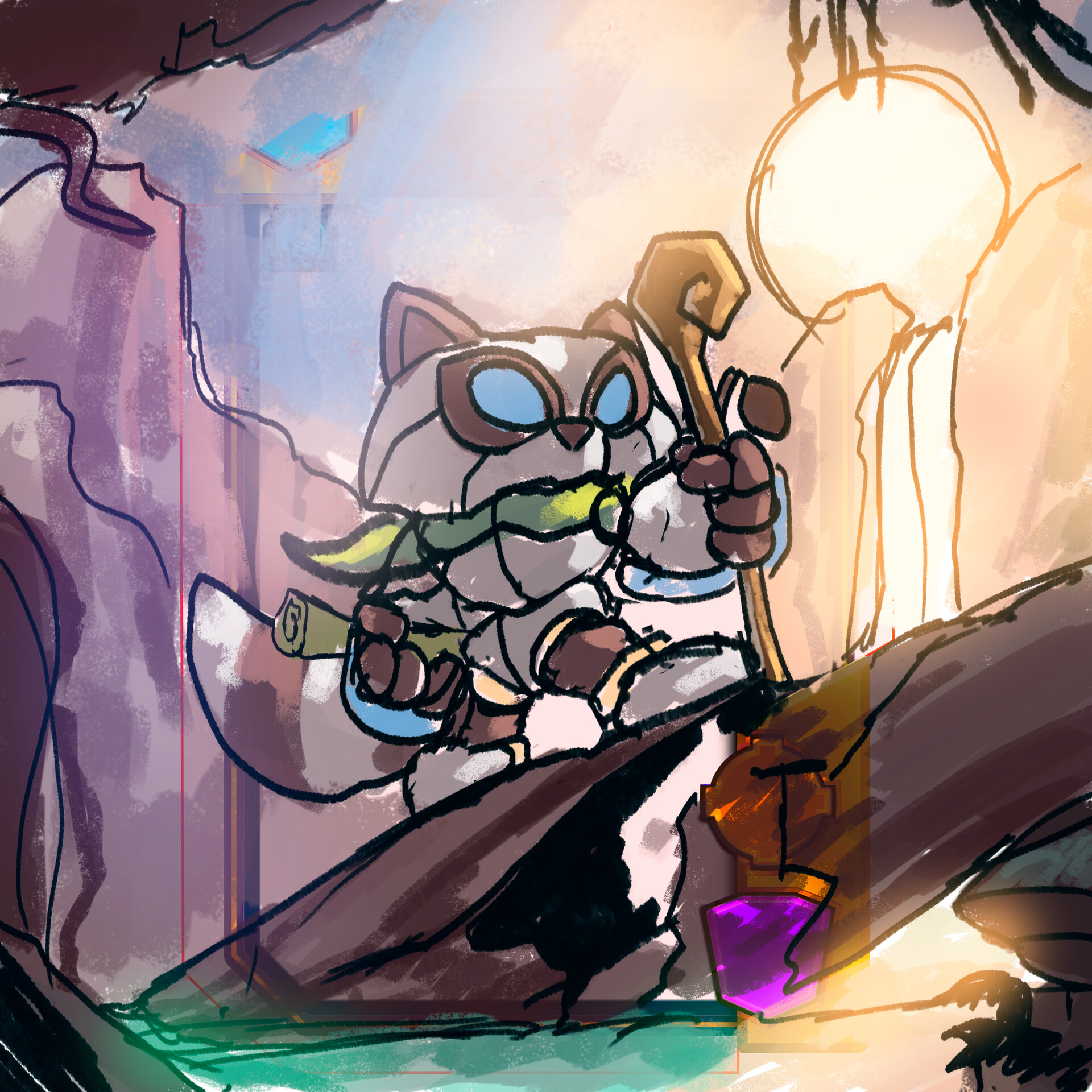
Composition
The rough establishes pose, lighting, scenery and interface before the illustration is polished.
Art and concept byRuântoni Farias ↗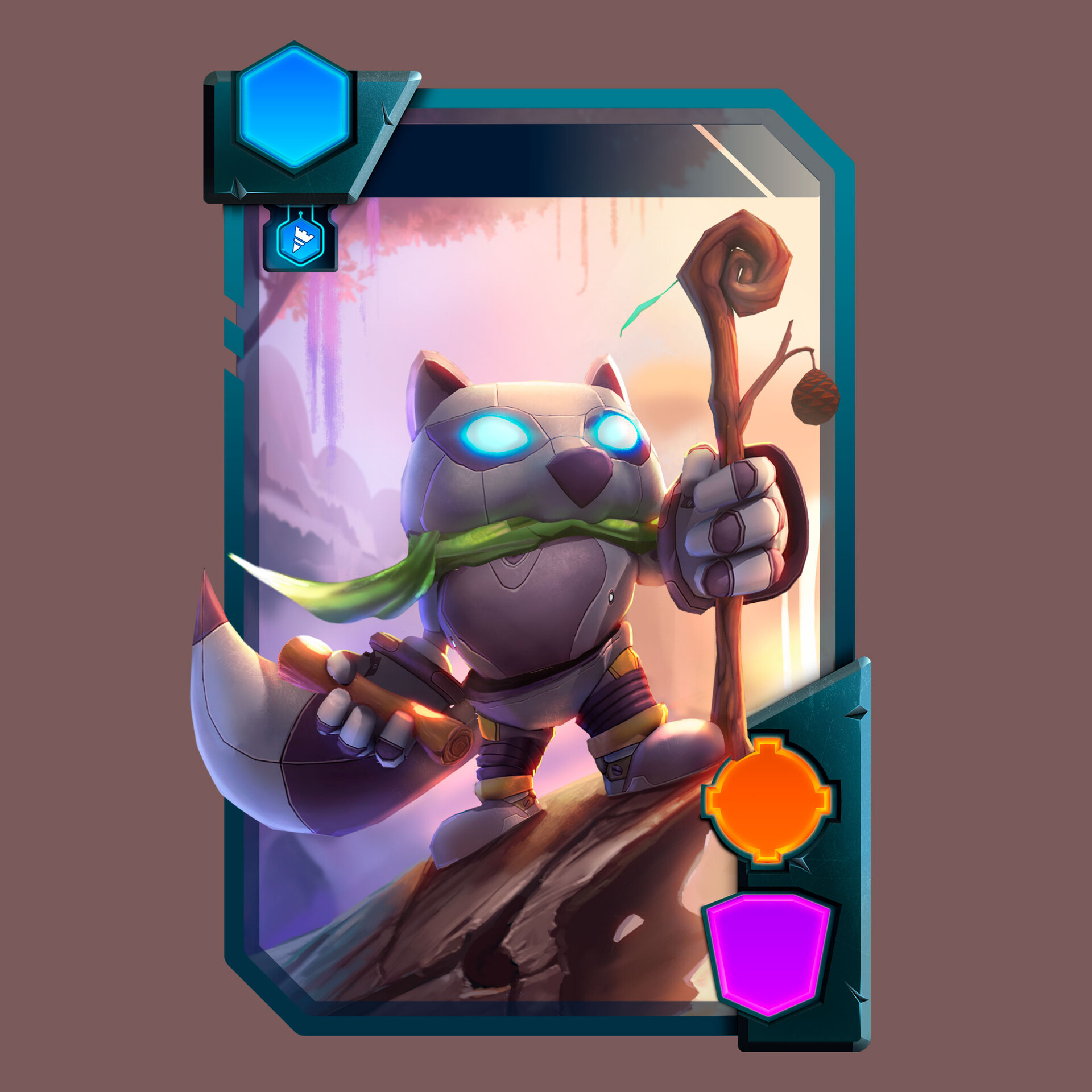
Final delivery
Character, illustration and frame converge in the final card — the initial plan now exists as product content.
Art and concept byRuântoni Farias ↗Expand a connected tactical game without fragmenting battle, campaign, quests, collection, seasons and digital ownership—or letting bot matches unbalance the reward economy.
Build recurring quests, bot fallback for matchmaking and separate PvP/bot reward contracts, including a daily allowance for rewarded bot matches, alongside DATA Pass, inventory, tutorial, NFT, minting and marketplace flows.
An ecosystem integrated into the public product that keeps the core loop available, connects progression with LiveOps and protects the economy by separating match access from reward eligibility.
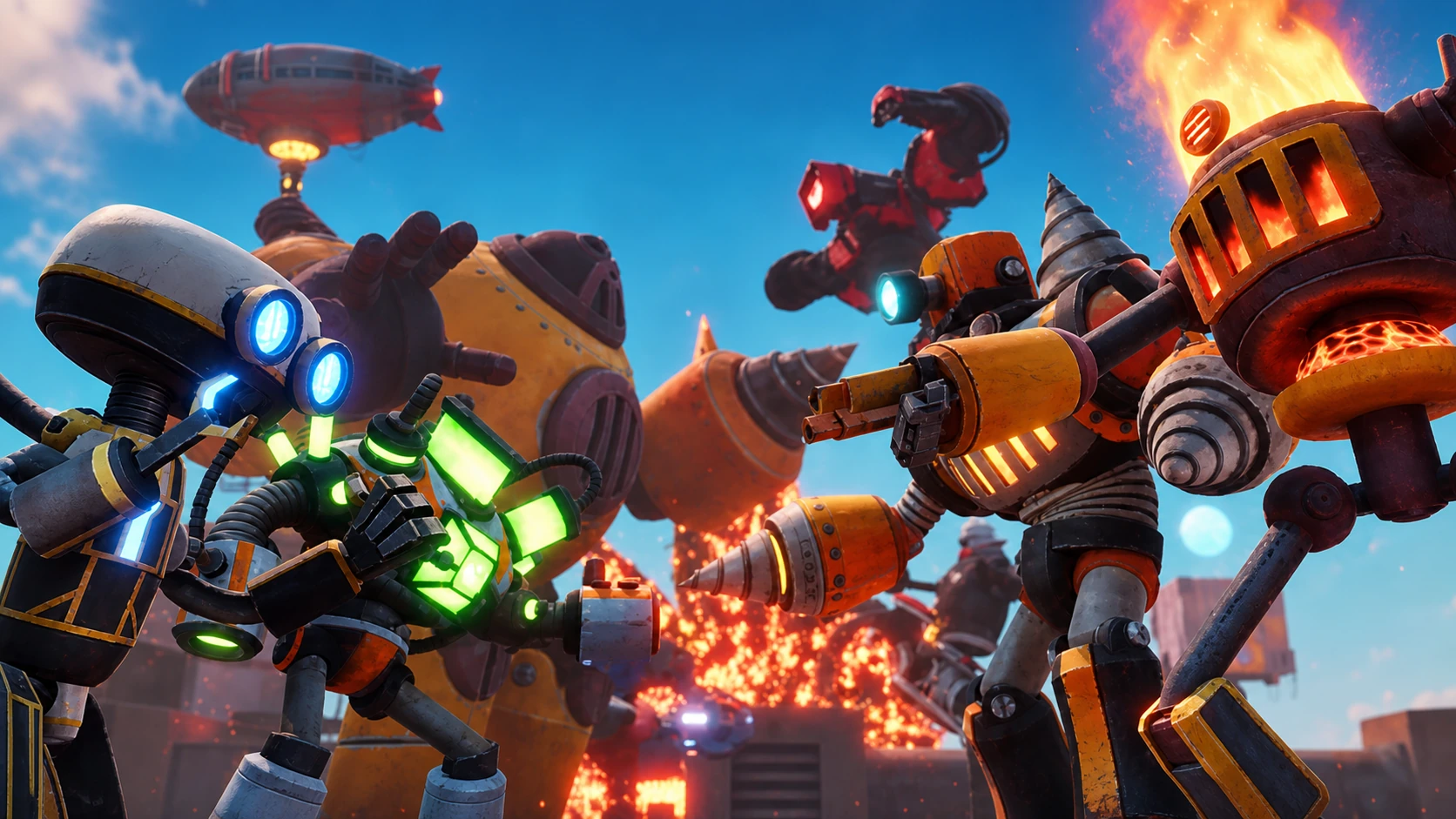
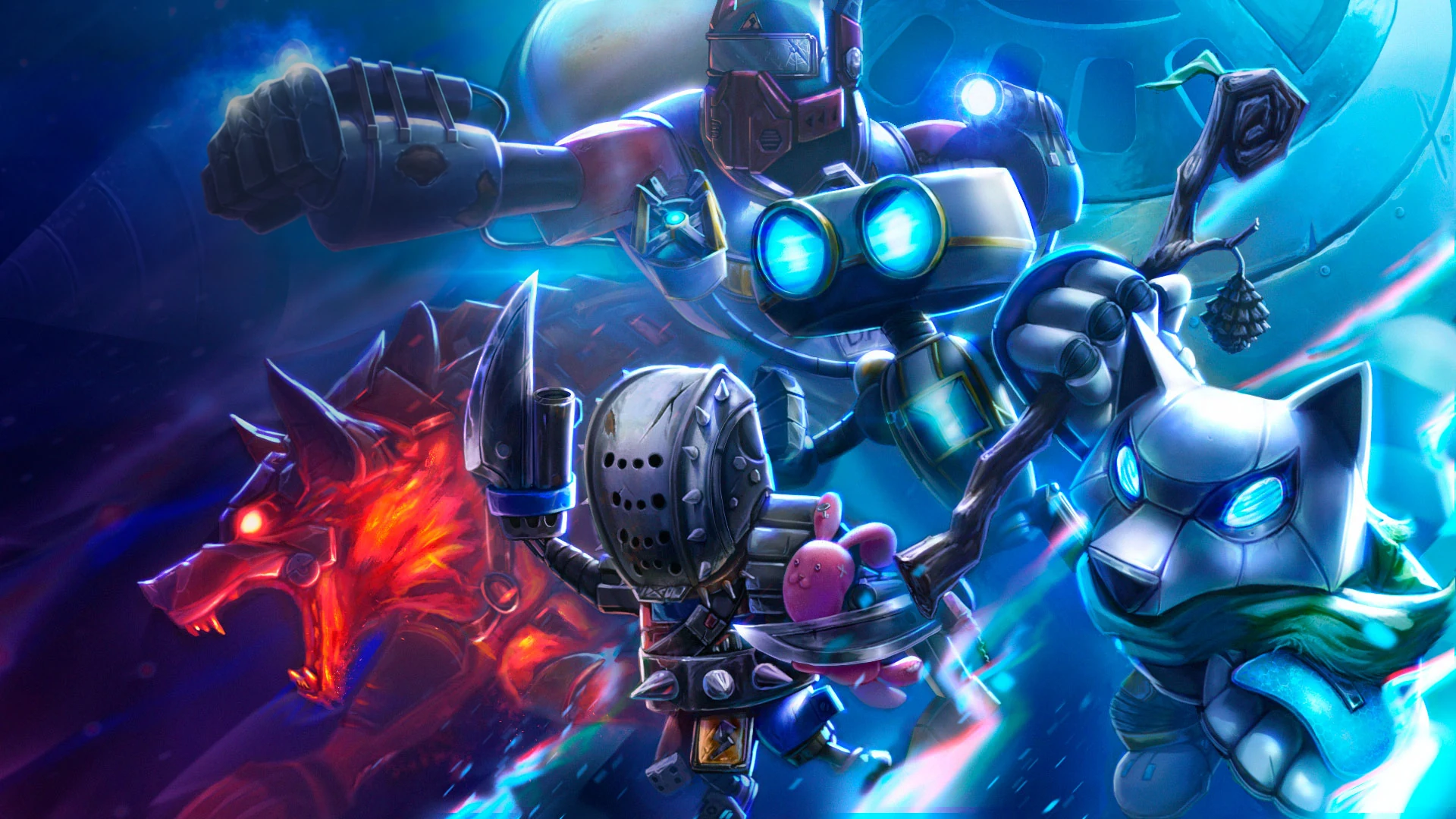
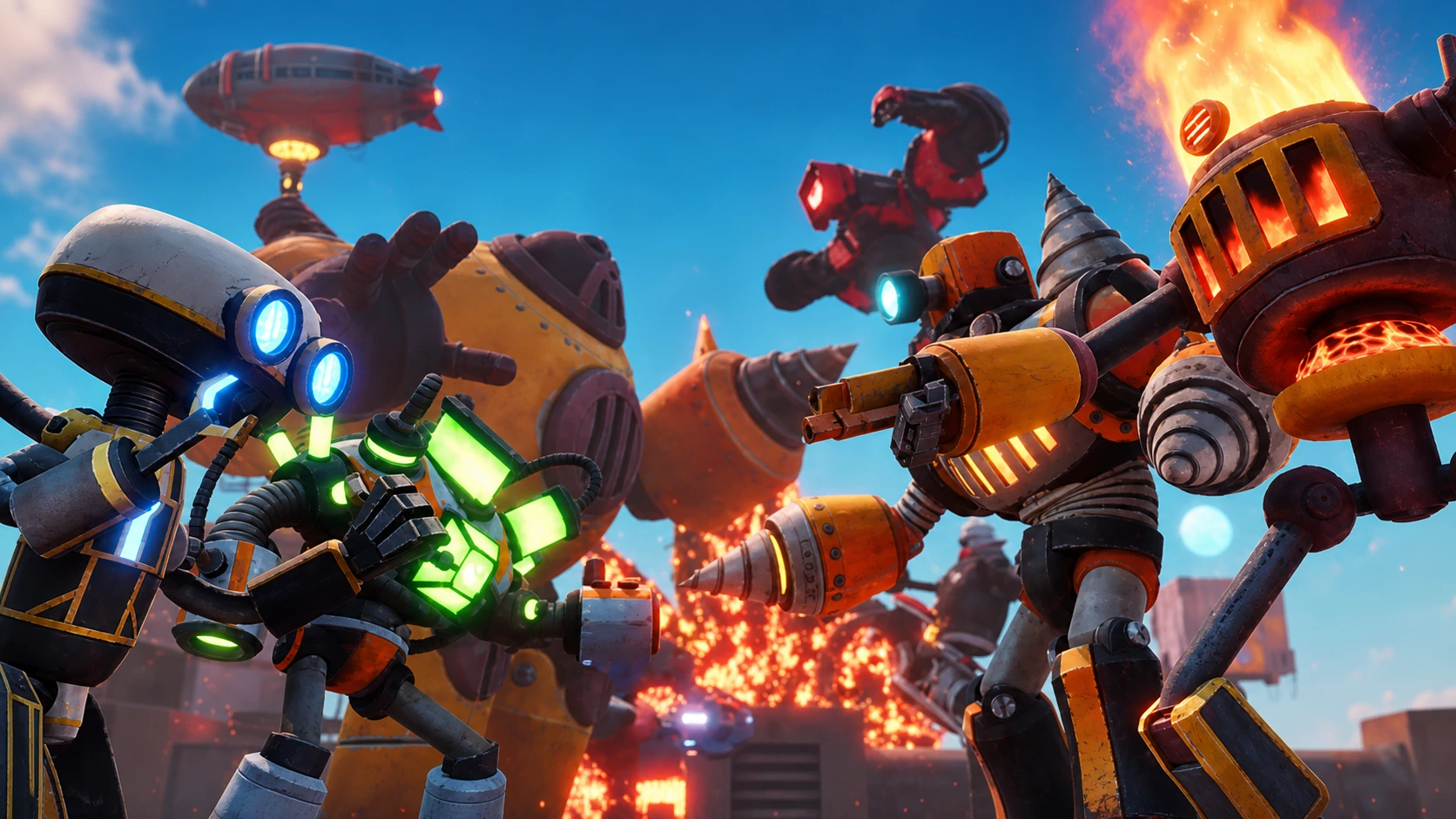
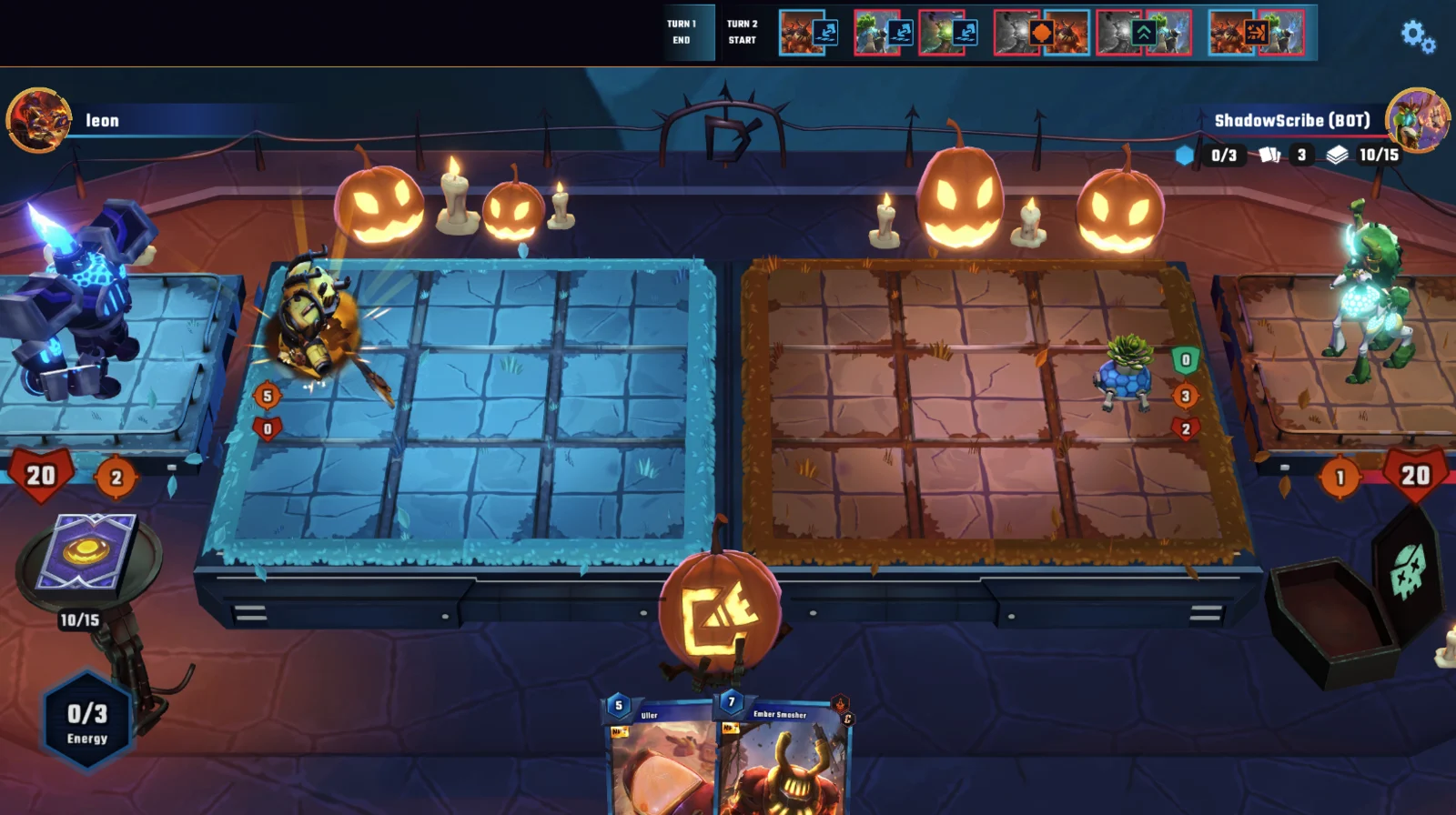
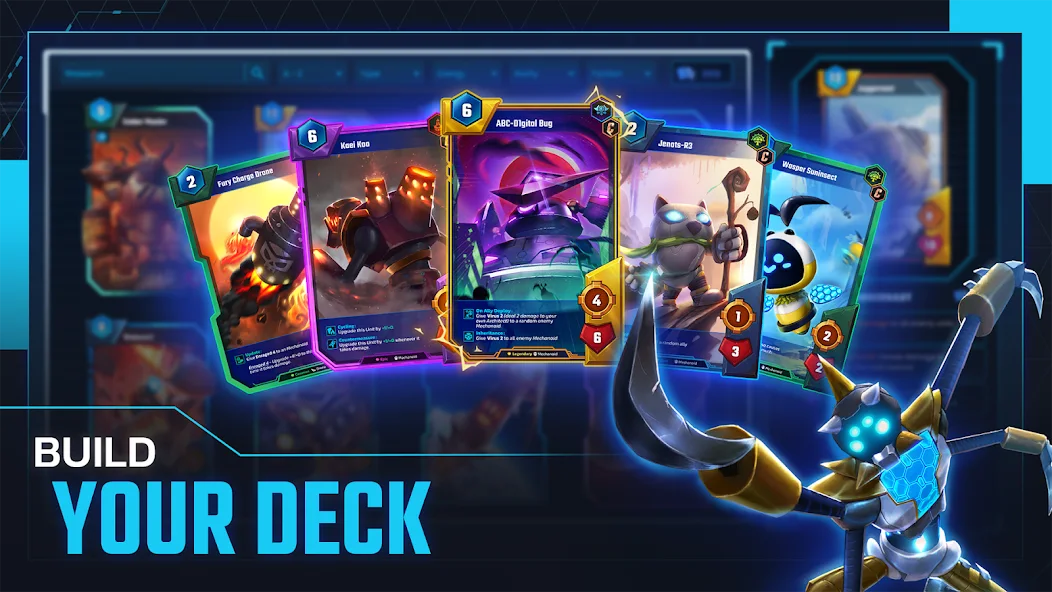
DATA2073: Battle Deck is a tactical card game set in a post-apocalyptic universe of Automatons, featuring over 100 unique characters to build your deck. On the board, positioning, energy, drones and card synergy define the rhythm of every turn-based match.
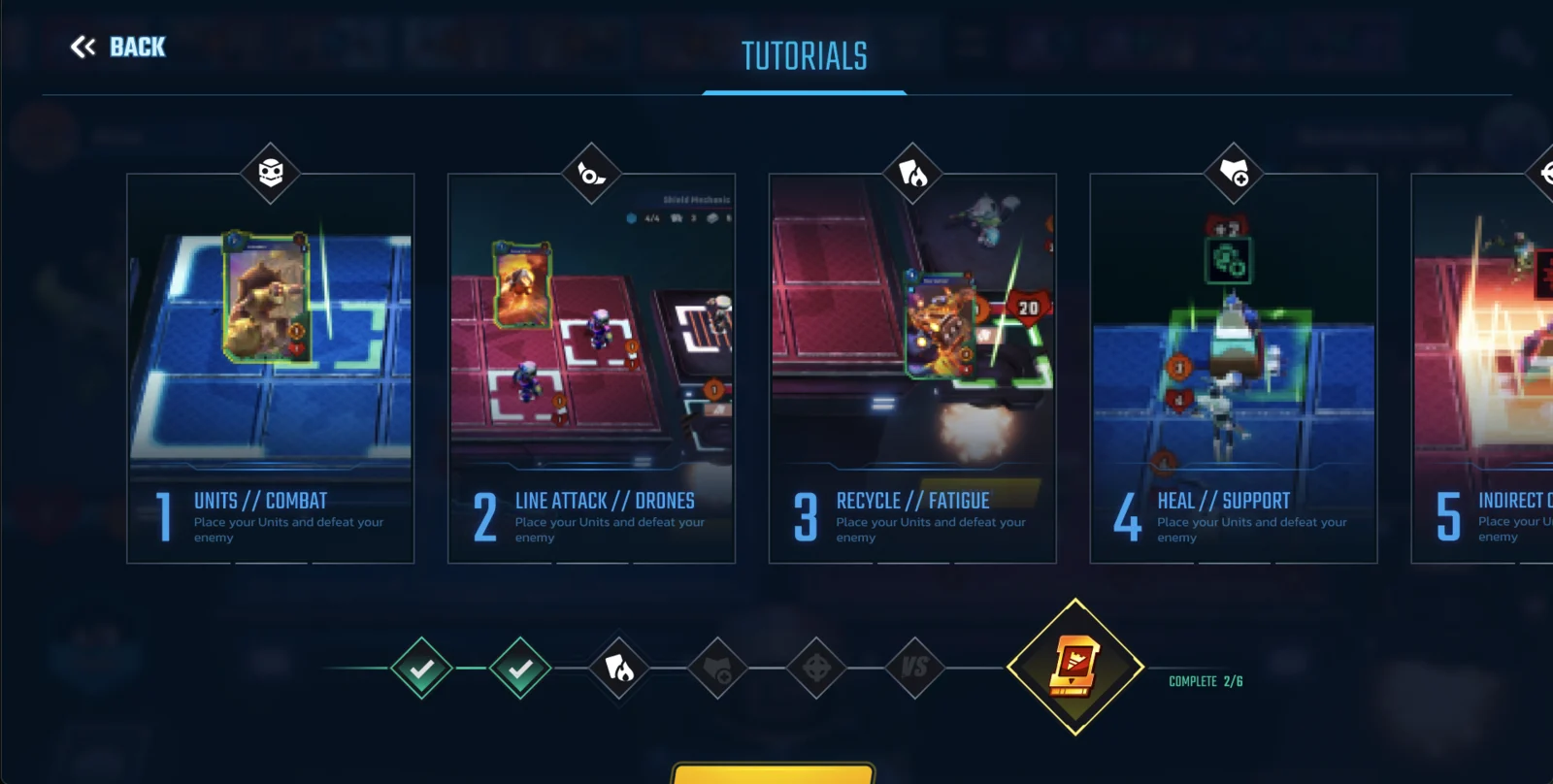
Combat is the center, but not the limit. Campaign maps, stage objectives, inventory, deck building and rewards lead players from one match to the next. The First Time User Experience (FTUE) was heavily optimized using deep drop-off analytics, introducing rules in stages to maximize player retention.
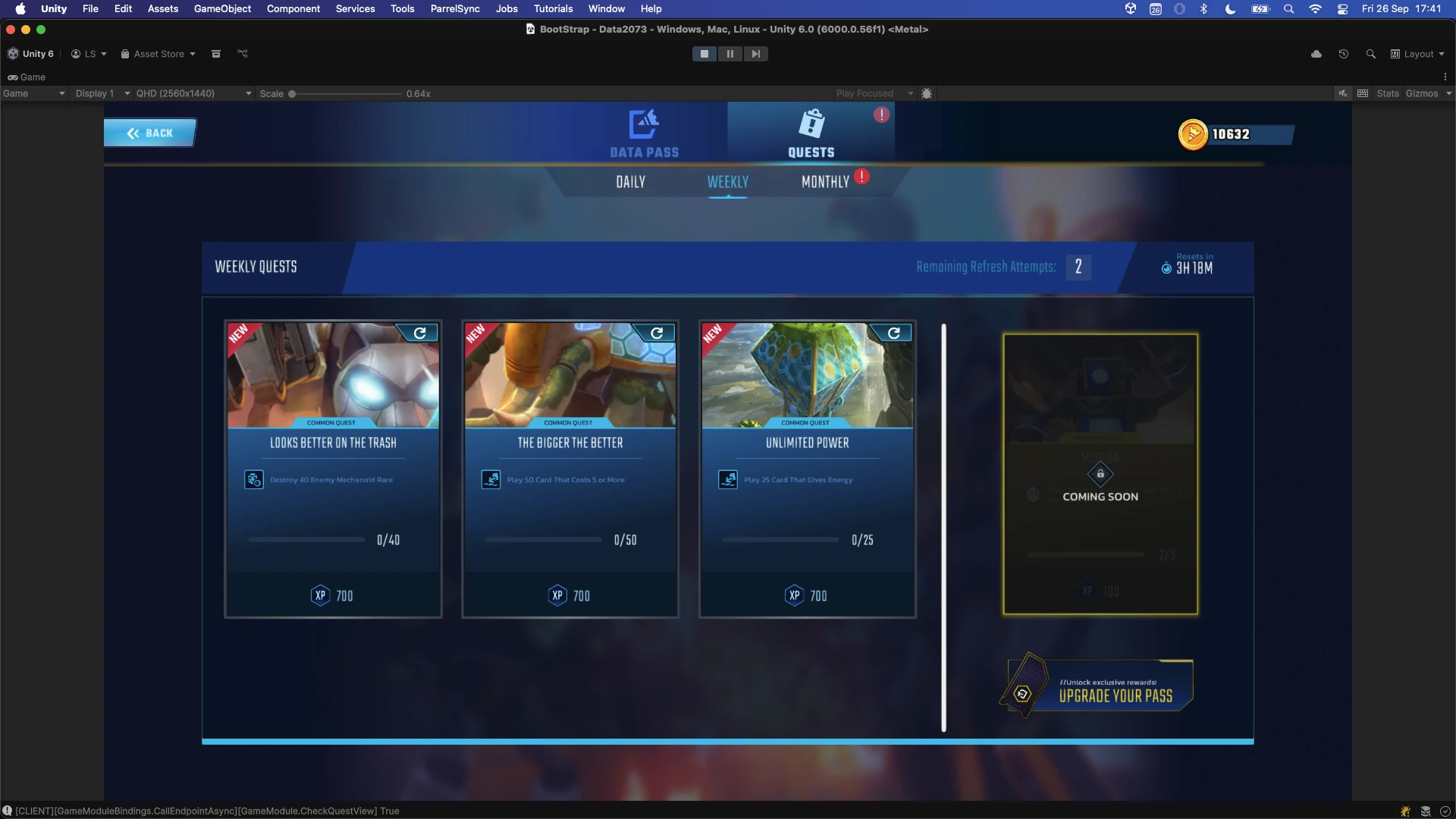
My technical contribution included the recurring quest system and the flow that keeps matchmaking playable when no human opponent is available. Daily, weekly and monthly quests receive progress from gameplay actions, validate completion and return rewards through the same shared pipeline used by other product systems.
PvP and bot matches, however, do not need to follow the same economic contract. The system selects reward configurations for each context instead of treating every victory as an identical event.
To prevent that fallback from becoming an unlimited source of currency or XP, rewarded bot matches use a configurable daily allowance. After the limit, players can still choose to continue against bots, but without additional rewards. The central lesson is to separate two decisions that look identical: keep the core loop available and control the economy’s faucet.
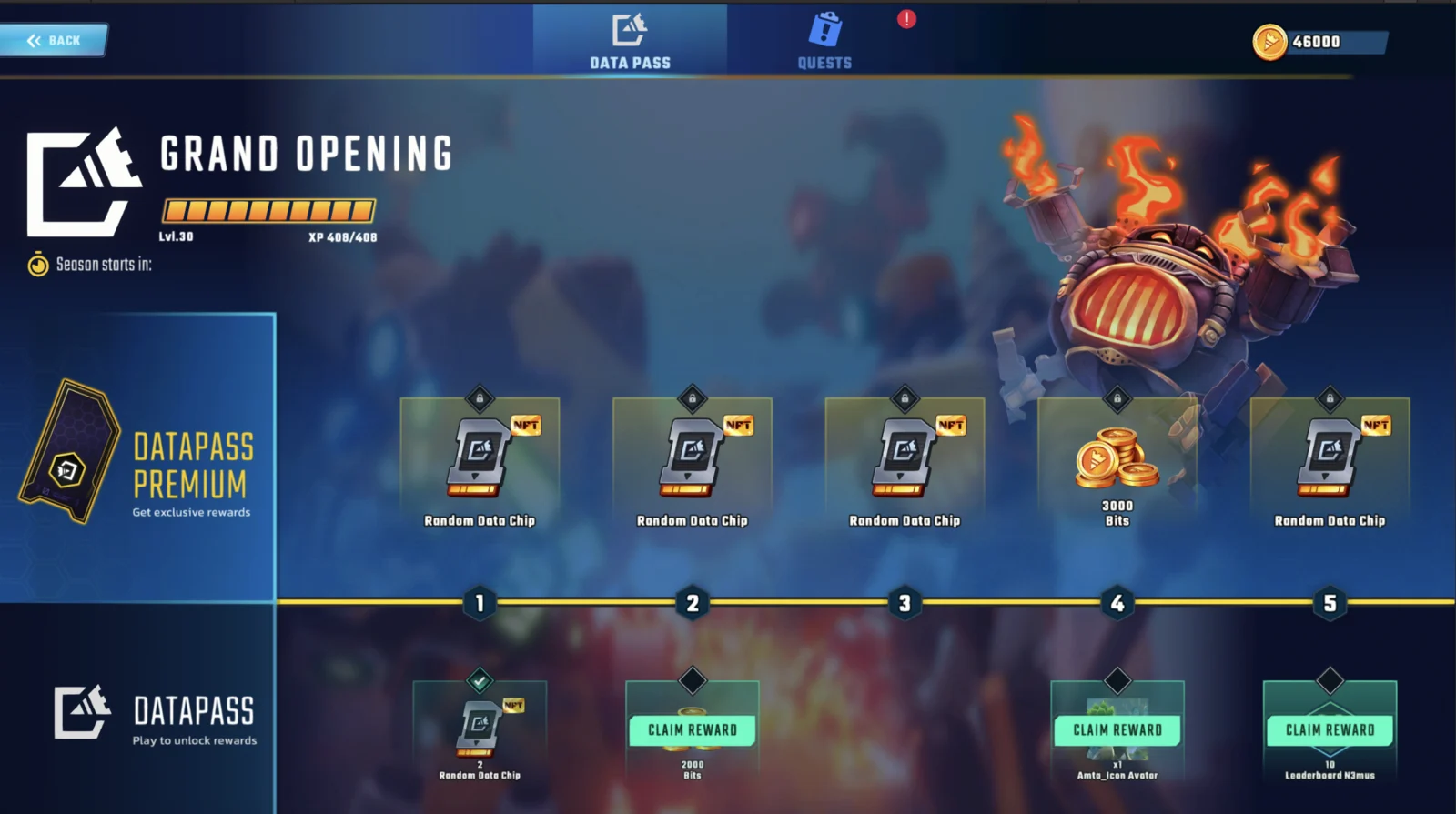
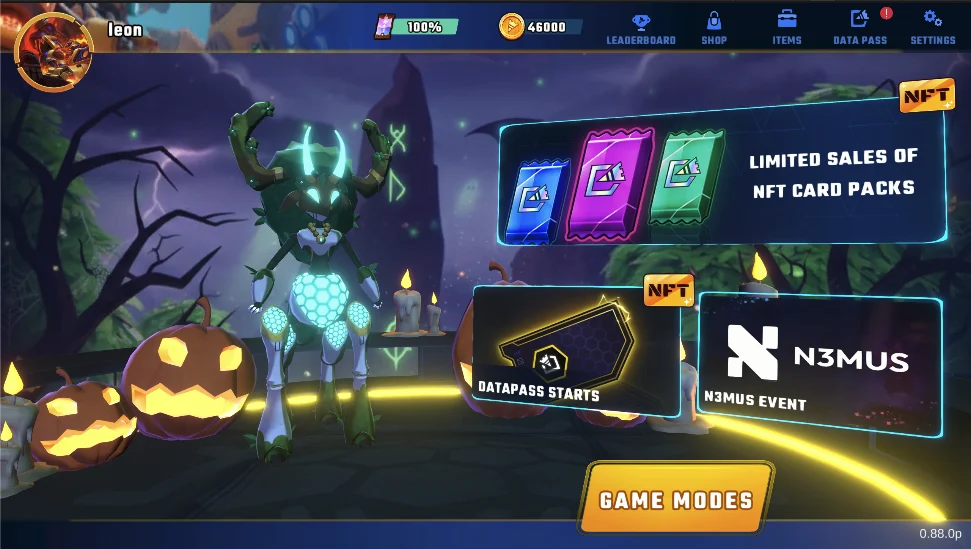
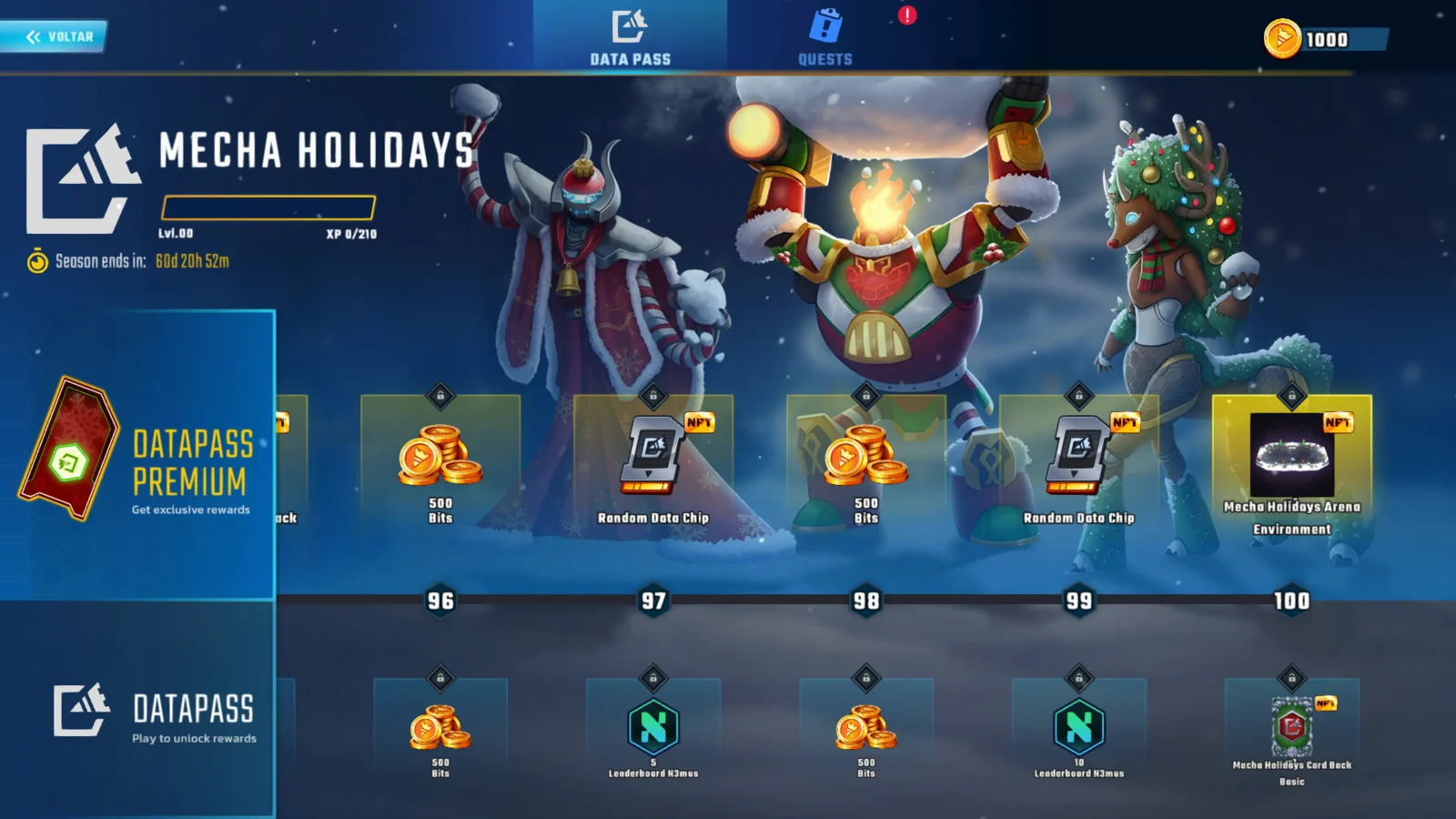
Screenshots preserved show the product changing in cycles: the DATA Pass launch, Halloween and Mecha Holidays. The entire operation relies on remote content delivery, allowing the team to enable and disable features in real-time via feature toggles, refreshing the operational rhythm without requiring new store updates.
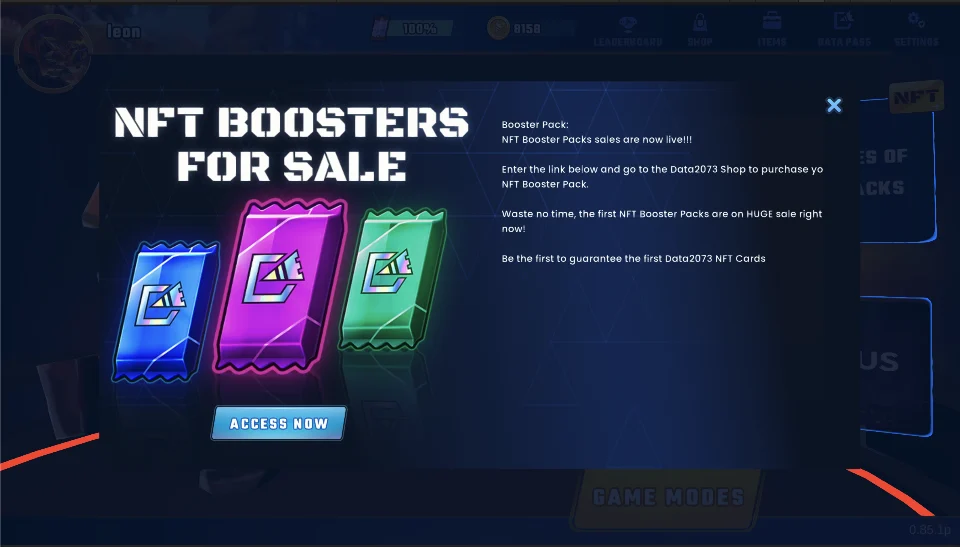
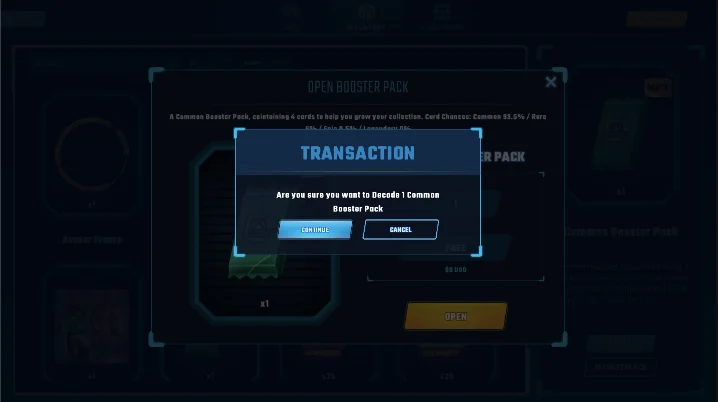
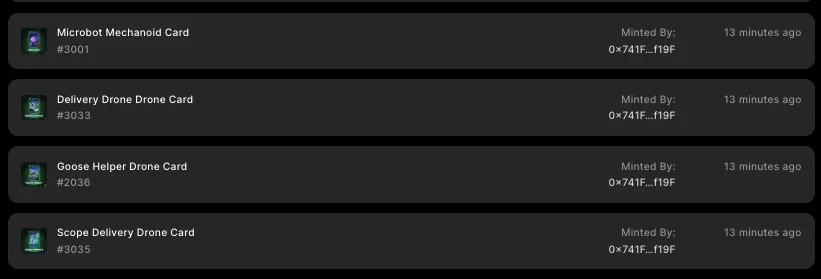
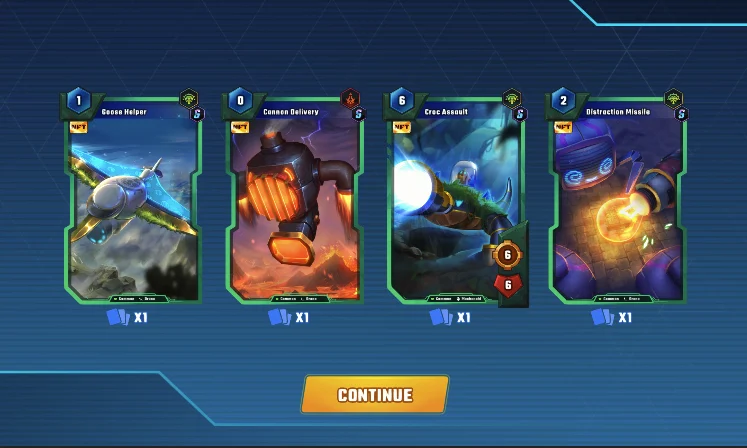
NFT booster packs, transaction confirmation, mint history and marketplace are part of the documented flow. Digital assets are not presented as an isolated promotional layer: card acquisition, ownership, collection and use connect directly to the metagame and deck building.
The documented work crosses quests, DATA Pass, inventory, tutorials, maps, seasonal events, rewards and Web3 integrations. The technical challenge was keeping those layers synchronized without hiding the main action behind disconnected menus.
The case uses material from real builds and can be checked against the official website and Epic Games Store release. It focuses on Unity contributions and documented systems without individually claiming studio art or intellectual property.
05 · Case proof
Risk
Decision
System
Outcome
Unity · C# · LiveOps · UI Systems · Web3 / NFT
Closure
An ecosystem integrated into the public product that keeps the core loop available, connects progression with LiveOps and protects the economy by separating match access from reward eligibility.