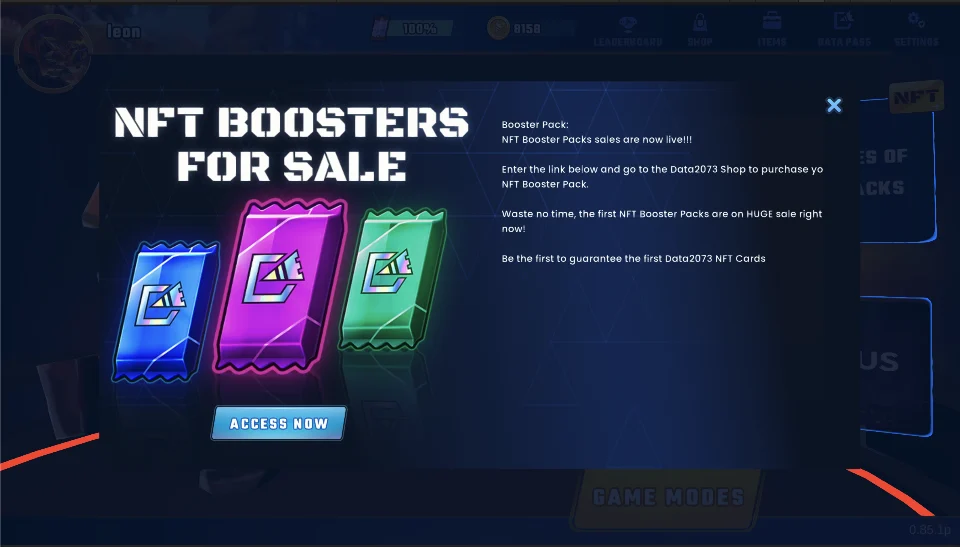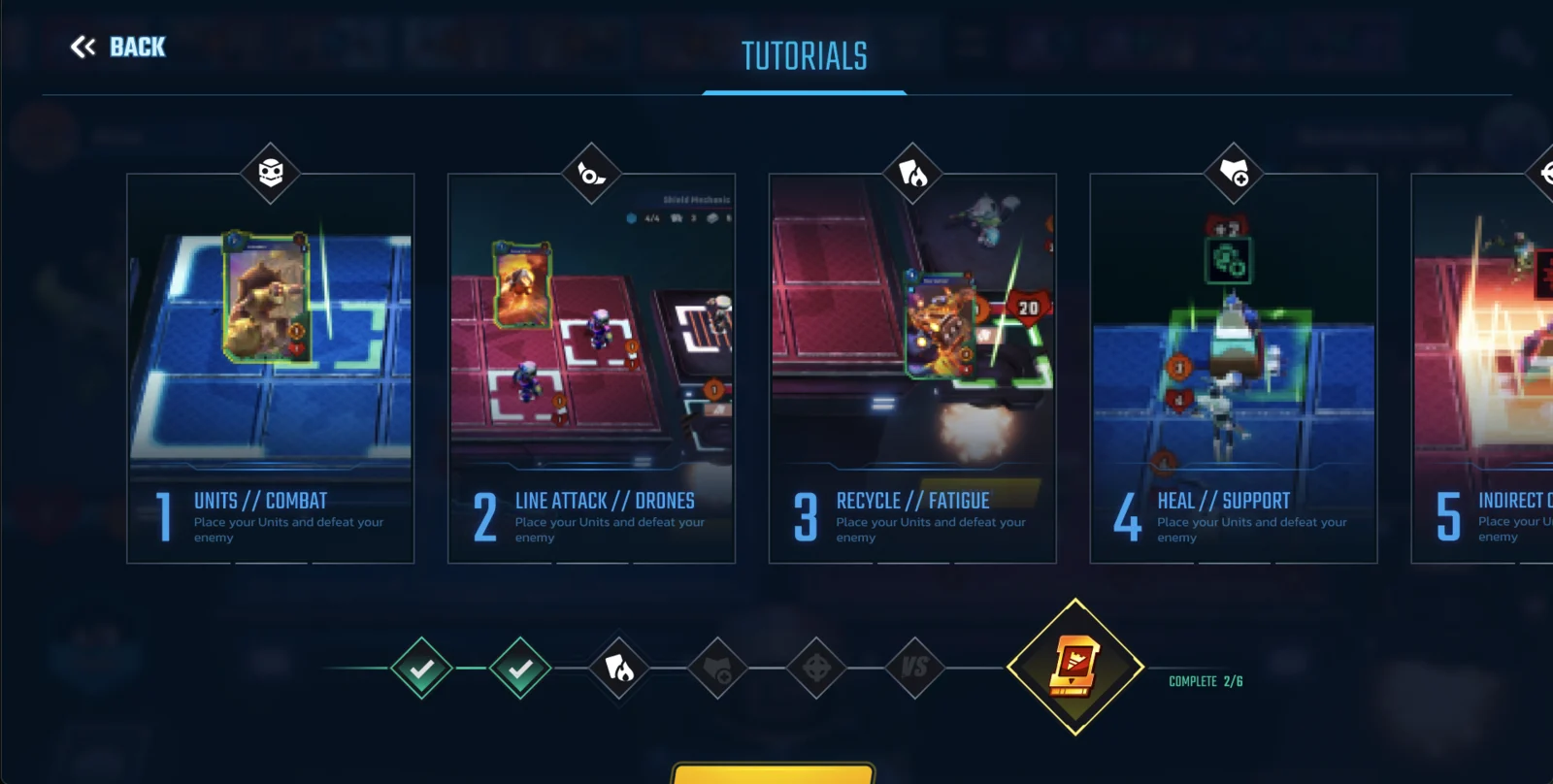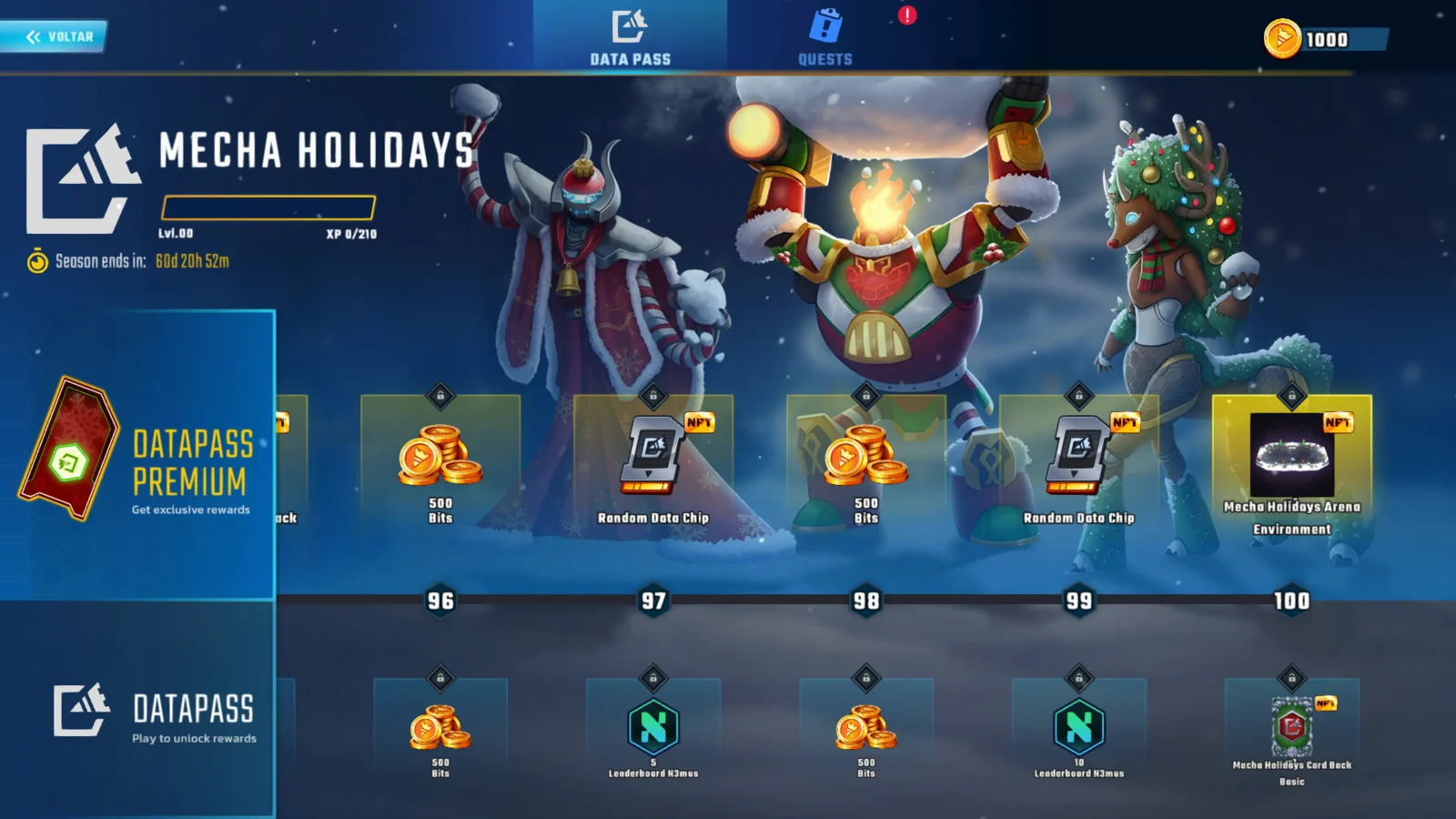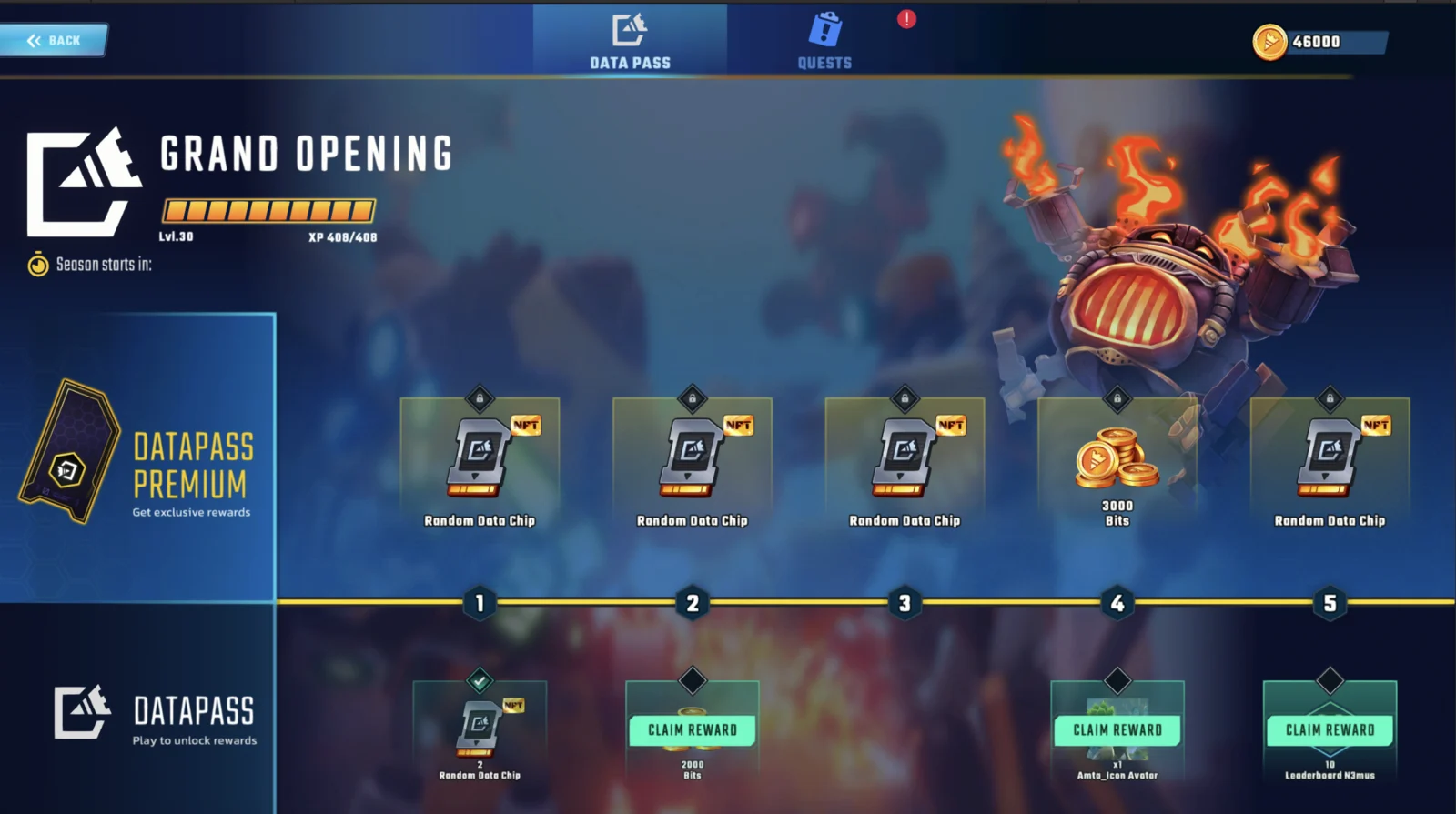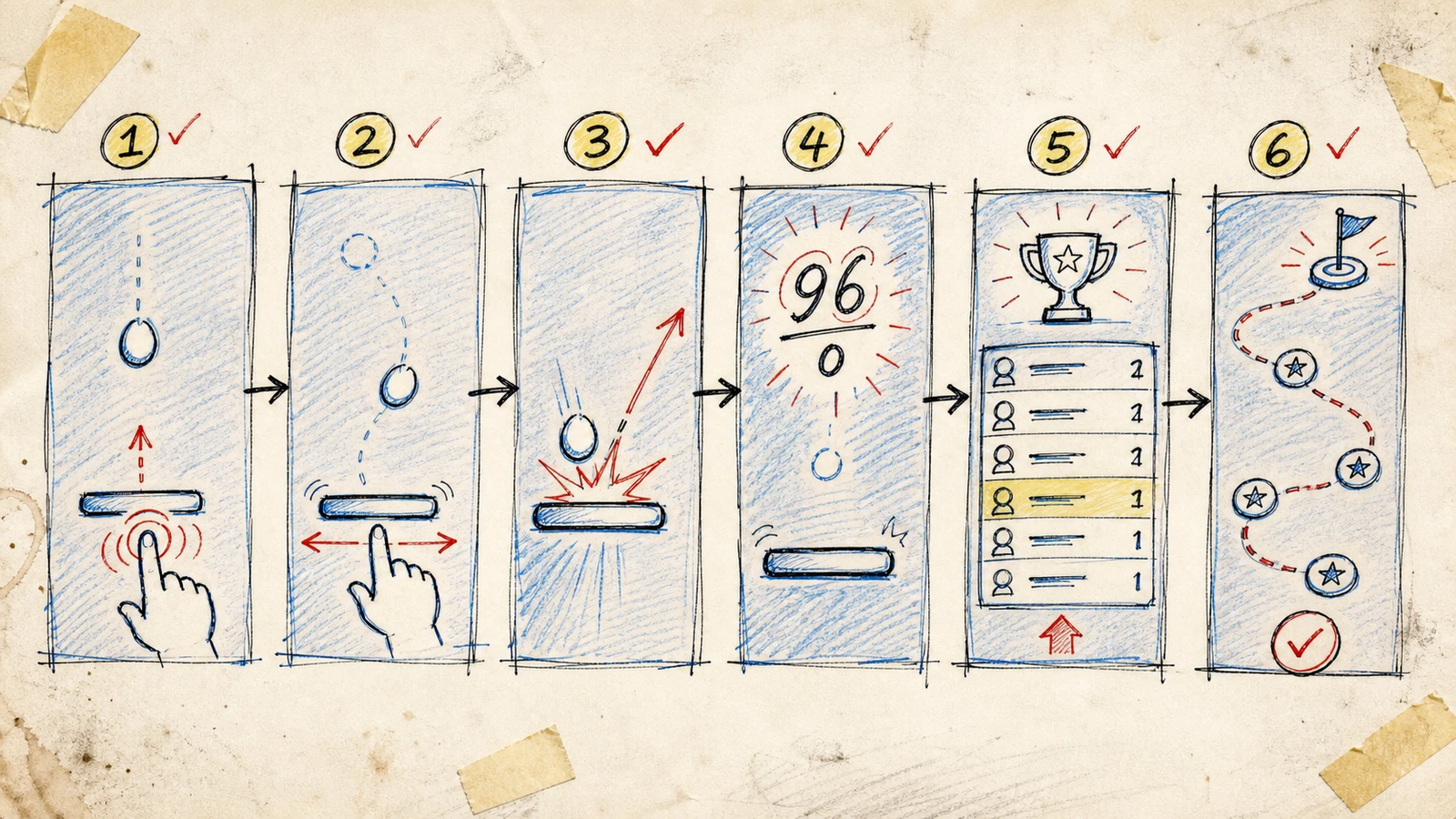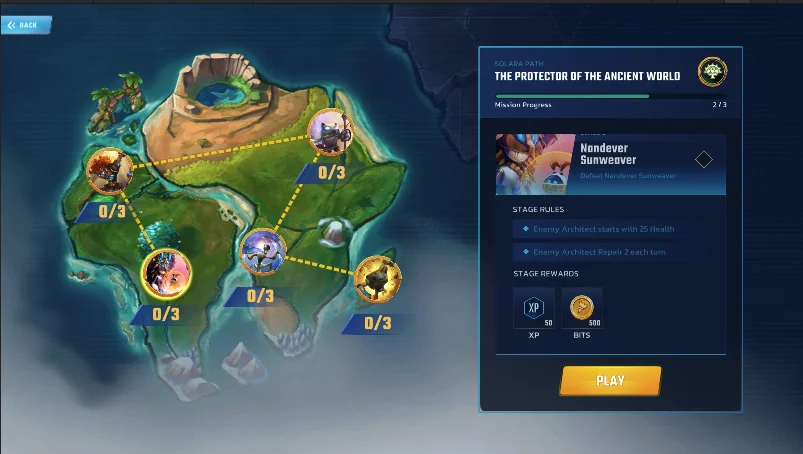


When a Web3 experience begins by asking players to choose a network, connect a wallet or sign something they do not yet understand, infrastructure takes the place of the value proposition. The problem is not only the number of steps: the product asks for trust before providing context.
A better onboarding flow protects the game’s primary promise. Players first understand the action, recognize progress and see something worth keeping. Identity, wallets and digital ownership appear progressively, at the moment they solve a need that is already visible.
The first task should prove the game
The first minute should answer “why should I continue?”, not “how does the infrastructure work?”. In a card battler, this means letting players read a unit, make a choice and see a consequence before introducing accounts, marketplaces or signatures.
A practical sequence is:
- action: perform a central decision;
- response: understand what changed on the board;
- progress: receive a readable objective or reward;
- identity: preserve something that now has value;
- ownership: explain when an asset can exist beyond the game boundary.
This order does not hide Web3. It gives Web3 meaning. “Create an account to preserve this deck” is a concrete promise; “create a wallet to start” transfers a technical decision to the player without context.
Separate playing, identity and ownership
Three layers are often compressed into one modal:
- playing: enter the core loop and learn the rules;
- identity: keep progress across devices and sessions;
- ownership: connect assets to an identity that can sign or transfer.
Those layers may share infrastructure without sharing the same moment in the experience. A player can begin as a guest, turn that session into a durable account and only then activate ownership features. Every transition should explain its gain and its cost.
The public DATA2073 FAQ on Epic provides useful context: an external wallet is not required to start, the experience uses Sequence with familiar authentication and there is an explicit difference between playing and interacting directly with blockchain. The public documentation proves product intent; it does not, by itself, describe every internal implementation detail.
Use familiar authentication and provision in the background
Email, social login and guest mode reduce the conceptual jump because they begin with patterns players already know. Sequence’s Embedded Wallet overview describes wallets integrated into the experience itself, while its authentication documentation shows that signing in can instantiate a wallet automatically.
This changes the role of the interface. Instead of teaching seed phrases, extensions and networks at first contact, it can teach three things that matter to the product:
- how progress will be recovered;
- which actions need confirmation;
- when an item stops being only game state and gains digital ownership.
Guest mode is especially useful for removing the initial barrier, but it needs a planned exit. Before granting a valuable asset or allowing an irreversible operation, the session should be linked to a durable authentication method. Sequence’s own documentation recommends that conversion before persistent value is delivered to the guest.
Make the conversion point earn the interruption
Every account prompt interrupts flow. The question is whether players understand why the interruption exists.
Good conversion points appear when value is about to be preserved:
- after the first victory;
- when an initial deck is completed;
- before claiming a persistent item;
- when enabling a marketplace, transfer or another optional feature;
- when continuing on a second device.
The modal should describe the consequence, not the technology. “Save your deck and continue on any device” explains a benefit. “Connect a compatible wallet” describes a mechanism. The second message can appear as detail or as an advanced option once the intent is clear.
A refusal path matters too. If digital ownership is not required for the core loop, “not now” should preserve playability and clearly state what remains unavailable. Consent is not real when the only path is accepting a system that has not been explained yet.
Model wallets and transactions as product states
A connected integration should not depend on one generic spinner. Sign-in, provisioning, linking, signing and confirmation are different states — with different owners and recovery paths.
A minimum model can distinguish:
- anonymous: no durable identity;
- guest: playable but still fragile session;
- authenticated: confirmed recoverable account;
- wallet provisioned: infrastructure ready in the background;
- ownership enabled: rules and consent presented;
- action requested: the player knows what will happen;
- waiting: signature, service or confirmation in progress;
- confirmed: inventory and feedback reflect the same truth;
- recoverable failure: cancel, retry or return to the game.
This state machine prevents the interface from inventing its own truth. It also records where loss occurs: during authentication, external-wallet linking, signing or after submission. Sequence’s account federation documentation is a reference for treating later identity and wallet linking as an explicit transition instead of an initial requirement.
A transaction should explain before, during and after
Before the action, the interface should answer:
- which item or permission is involved;
- whether cost, waiting or irreversibility exists;
- which account will receive the result;
- how to cancel without losing local progress.
While waiting, it should distinguish “waiting for your confirmation” from “processing through the service”. Afterwards, it must reconcile result and inventory: show success, update visible state and provide a way to inspect the record. On failure, it should preserve intent and say whether repeating the action is safe.
The goal is to remove the infrastructure’s ability to feel random. Players do not need to understand the whole protocol; they need to understand the contract of this action.
Measure the funnel as a sequence of decisions
Counting only created accounts hides where onboarding fails. A useful funnel records events close to the experience:
- tutorial started and first decision completed;
- first reward presented;
- save prompt displayed, accepted or postponed;
- authentication method selected and completed;
- wallet provisioned;
- digital ownership explained and enabled;
- first connected action requested, cancelled, confirmed or failed;
- later return with recovered progress.
Primary metrics should combine activation, conversion and recovery. A high wallet-creation rate does not compensate for leaving before understanding the game. Likewise, an excellent guest flow remains incomplete if players lose progress because they never understood when the session needed to be linked.
Applying the principle to DATA2073
DATA2073 has a strong reason to delay infrastructure language: its first promise is tactical. Grid, position, faction and deck building already create their own learning curve. Onboarding can preserve that order:
- teach one combat decision;
- reveal progression and the value of a new card;
- offer a durable identity to preserve the collection;
- explain digital ownership when it expands acquisition, collecting or trading;
- keep an external wallet as a linking option, not a toll for the first match.
That design is consistent with the experience publicly described by Epic and the embedded-wallet patterns documented by Sequence. Product work turns those capabilities into a readable journey: explicit states, honest refusal, recovery and feedback that continue speaking the language of the game.
Production checklist
Before releasing a Web3 flow, check whether:
- players experience value before the account prompt;
- guest, email and social login have clear limits;
- a guest converts to a recoverable identity before receiving persistent value;
- an external wallet can be linked later, when useful;
- costs, permissions and irreversibility appear before confirmation;
- waiting, cancellation, failure and retry are distinct states;
- inventory and confirmation use the same source of truth;
- play can continue when an optional layer is unavailable;
- analytics distinguish abandonment, refusal and technical failure;
- support can identify the transition where the journey stopped.
Web3 stops blocking onboarding when it stops behaving like an entrance ceremony. The infrastructure remains important, but it appears as the answer to an intent players already understand: save, own, transfer or continue.
Once onboarding is complete, the next challenge is ensuring that the digital assets themselves feel native to the gameplay rather than isolated from it. You can read more about how DATA2073 turns digital ownership into a seamless part of deck building and LiveOps in our companion article: Integrating NFTs into the Core Game Loop.